

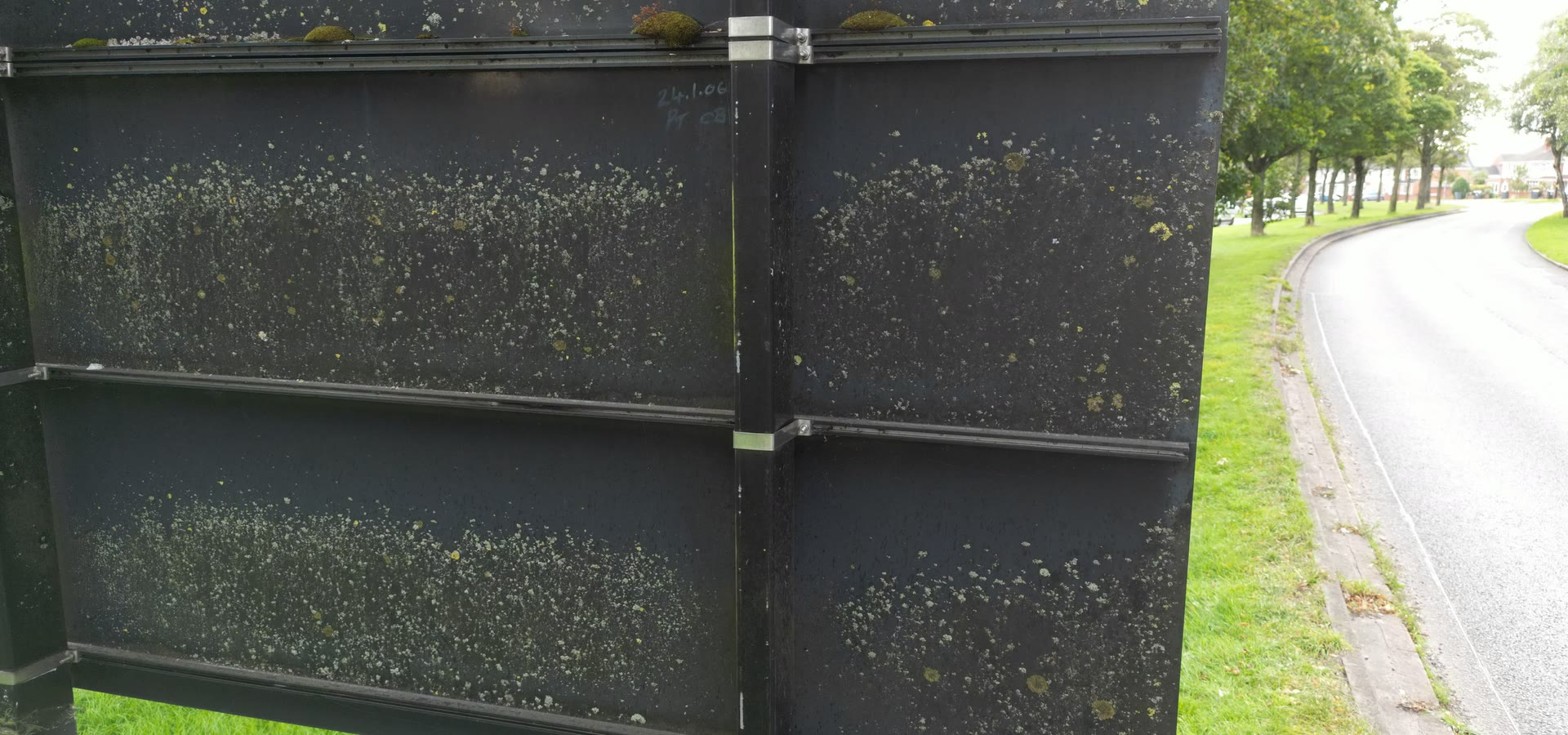
Remote asset management & airchecks
One programme, every asset type, a single consistent condition record.
Aerial asset inspection gives owners a fast, consistent condition record across mixed asset stocks: structures, lighting, signals, drainage and earthworks captured in one programme, to one standard, without closures or access plant.
Inspection budgets rarely stretch to every asset every year. Cutting the access cost changes that maths: aerial programmes let owners inspect more of the stock, more often, and target detailed engineering effort where the evidence says it is needed.
Explore an asset aircheck
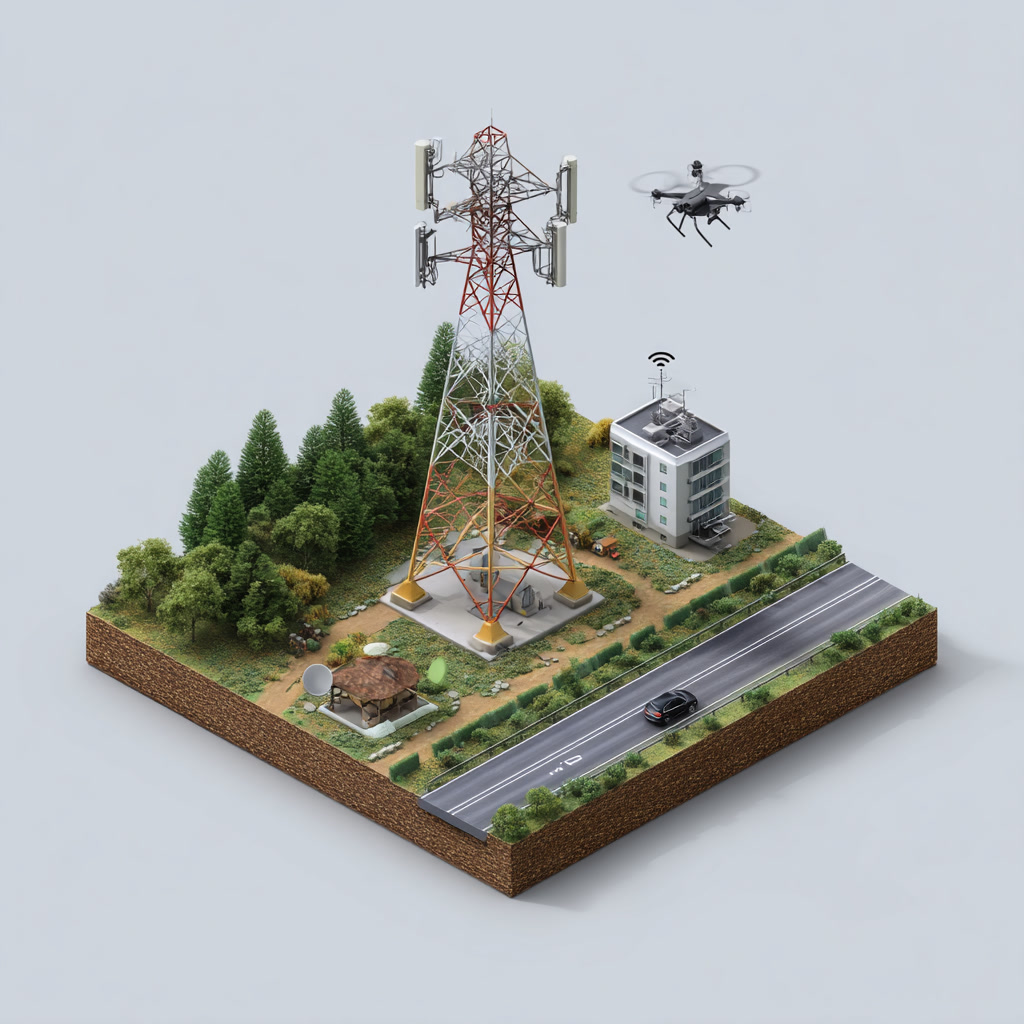
Click a point to see how one aerial visit records the condition of a mixed set of assets.
Masts & antennas
Antennas, mounts and cable runs at height captured in detail, with no climb and no outage.
You receive: Close-range asset imagery
Repeatable aircheck
Fixed, repeatable capture positions mean each aircheck compares directly with the last, so change is easy to spot.
You receive: Comparable visit-by-visit record
Structure & base
Lattice members, foundations and compound fencing recorded for structural and security condition.
You receive: Condition-scored records
Roofs & buildings
Rooftop plant, roof coverings and building envelopes inspected without scaffold or roof access.
You receive: Roof and building condition
Compound & ground
Cabins, cabinets, drainage and ground condition captured across the whole site in one pass.
You receive: Site-wide orthomosaic
Roadside interface
Where assets sit beside the highway they are captured from the verge, with flights kept clear of live traffic.
You receive: Roadside asset records
Watch the work.
Asset airchecks
Aerial asset inspection gives owners a fast, consistent condition record across mixed asset stocks: structures, lighting, signals, drainage and earthworks captured in one programme, to one standard, without closures or access plant.
Most asset owners manage mixed stock: bridges next to walls, lighting next to signals, culverts under embankments. Inspecting each with a different method, contractor and format produces inconsistent records and duplicated site visits.
HDS runs combined aerial programmes: one mobilisation covers multiple asset types along a route or across an area, captured to a consistent standard and referenced to your asset register. The result is a single, comparable condition record your whole team can work from.
- Structures and bridges
- Lighting and signals
- Retaining walls and culverts
- Earthworks and embankments
- Fencing, barriers and signs
- Car parks and depots
Emergency & post-incident inspections
Rapid-response aerial inspection for infrastructure emergencies: bridge strikes, structural concerns, storm damage and incidents, captured safely within hours and delivered to decision-makers the same day.
When something has gone wrong, the first question is always how bad is it, and the worst way to answer is to send a person towards an unstable structure. HDS mobilises fast, captures the asset from the air and puts high-resolution evidence in front of your engineers while the incident is still being managed.
Same-day delivery is standard for emergency work: imagery is transferred from site, structured for review and supported by immediate verbal findings where the situation demands it.
- Struck bridges and gantries
- Storm-damaged structures and roofs
- Unstable slopes and retaining walls
- Fire-damaged buildings (external)
- Flood-affected infrastructure
- Incident scene documentation
- Road traffic collision scenes (post-response)
- Structural impact damage
Roofs & buildings
Aerial roof inspection surveys the full roof area in high resolution, condition, defects, drainage and plant, without scaffolding, edge protection or anyone leaving the ground.
Roof access is one of the most disproportionate costs in building maintenance: scaffold, edge protection and permits, all to look at something a drone photographs in an hour.
HDS captures the complete roofscape: coverings, flashings, rooflights, gutters, plant and penetrations, in detail down to individual fixings. Thermal capture can be added to trace leaks and insulation failure in the same visit.
- Industrial and warehouse roofs
- Commercial and retail buildings
- Public buildings and schools
- Heritage and fragile roofs
- Rooflights and fragile surfaces
- Roof-mounted plant and PV
From desktop review to delivered data.
Choose the assets
Masts, roofs, compounds or plant you need checked, and how often.
Plan the check
Repeatable flight positions for each asset type.
Capture
Close imagery of fixings, structure and condition.
Review
Changes and defects flagged against the last check.
Share
Condition records your maintenance teams can act on.
What you receive.
- Consistent multi-asset condition record
- Defect logs per asset type
- Imagery referenced to your asset register
- Prioritisation summary for engineering follow-up
- Secure cloud access
- Same-day high-resolution image delivery
- Immediate verbal findings where required
- Structured follow-up evidence pack
- Repeat capture for ongoing monitoring
- Secure cloud access for responders
Why clients switch to drones.
- One programme across mixed asset stock
- Consistent standard, comparable records
- Referenced to your asset register
- More of the network inspected for the same budget
- Annual benchmarking made practical
- Engineering effort targeted by evidence
Safe by design, never over live traffic.
- Fewer climbs on masts and structures
- No one on fragile or high roofs
- Checks repeated without extra access equipment
Carbon
Remote checks mean fewer climbs, fewer access vehicles and fewer wasted visits to assets that turn out to be fine.
Productivity
Several assets checked in a single visit, so climbing teams go only where the imagery shows they are needed.
Recent projects.
Questions clients ask.
Can one programme really cover different asset types?
Yes. That is the point: one mobilisation, one standard, one record across the stock.
How is the data organised?
By your asset register and numbering, so it drops into your existing systems.
Can you benchmark condition year on year?
Yes. Repeatable capture makes annual comparison meaningful.
What scale can you handle?
From a single depot to route-wide and area-wide programmes.
Who reviews the outputs?
Your engineers, at their desks, with our structured records in front of them.
How fast can you be on site?
Typically within hours for emergencies, subject to distance and airspace; we confirm the moment you call.
Can you fly at night?
Night operations are available under our authorisation where the situation requires.
- CAA Operational Authorisation
- Site-specific RAMS on every job
- GVC and A2 CofC pilots
- CSCS, T1/T2 trained crew
- £10m public and employers liability
- Never over live traffic
Check your assets remotely.
Tell us the assets and the check you need, and we will plan a repeatable aircheck.