

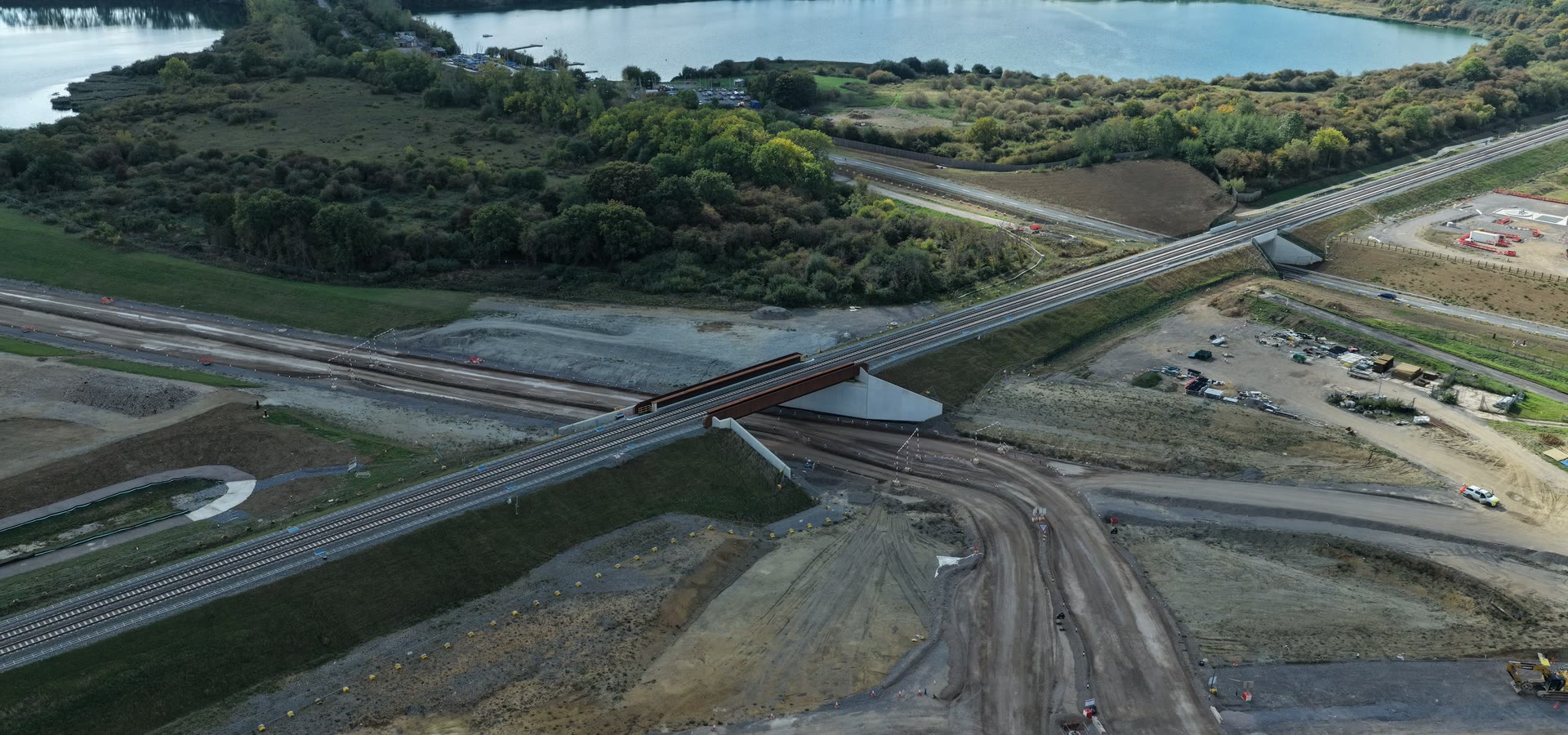
Drone construction progress monitoring
The programme, evidenced: repeatable aerial capture your whole team works from.
Structured aerial progress monitoring gives contractors, clients and stakeholders one reliable visual record of the works: repeatable capture, structured reports and month-on-month comparison, proven on HS2 for EKFB.
Delivery teams need evidence, not recollection: for programme reviews, valuations, stakeholder updates and, when it comes to it, disputes. A structured aerial record is the cheapest insurance a programme can buy.
Explore a progress survey
Click a point to see what each monitoring visit captures on a live scheme, and what your teams receive.
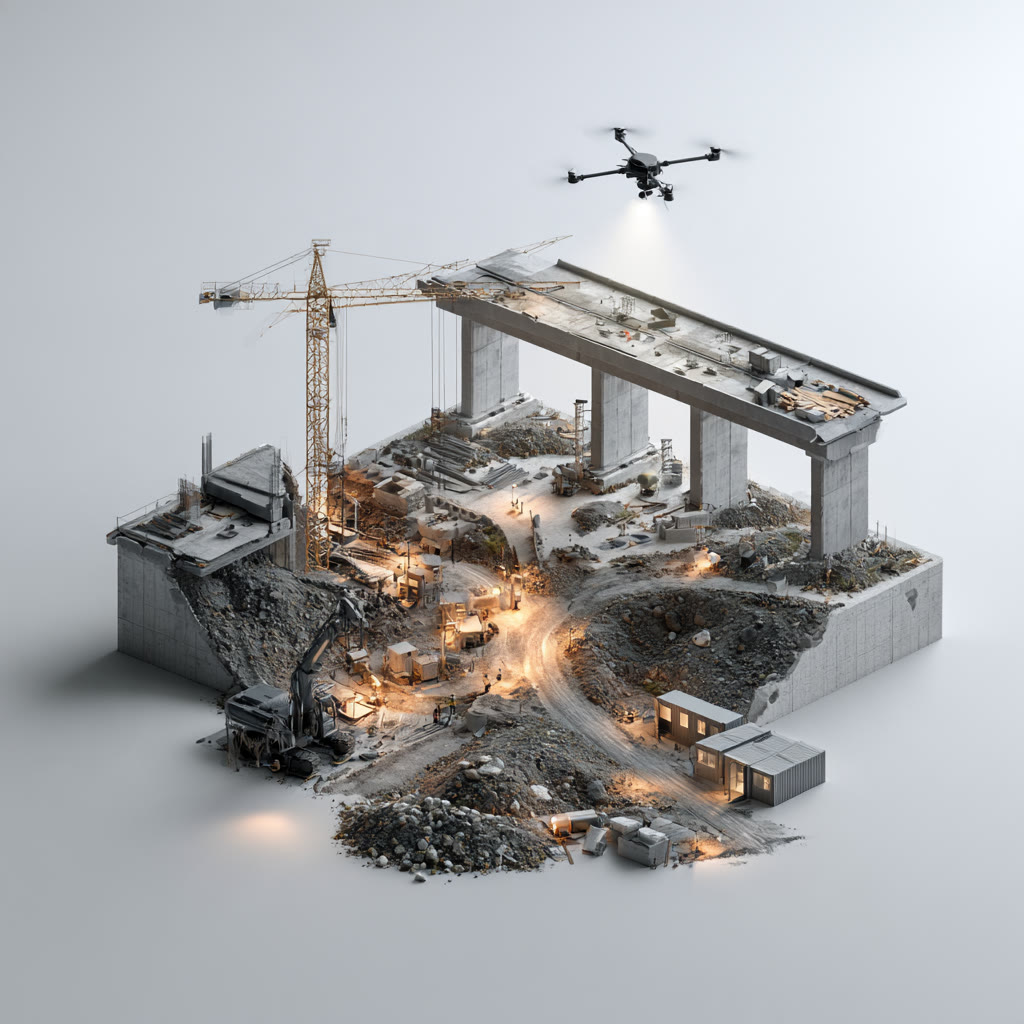
The same routes, every visit
Flights repeat fixed routes and positions on a bi-weekly or monthly rhythm, so every issue compares like for like.
You receive: Repeatable aerial image set
Structures going up
Piers, beams and decks recorded at each stage, building a record of how and when the structure was built.
You receive: Milestone documentation
Plant and lifts
Cranes, lifts and temporary works captured as they happen, for the programme record and for briefings.
You receive: Annotated milestone highlights
Earthworks
Cut, fill and haul roads seen from above, month on month, so change is easy to spot.
You receive: Month-on-month comparisons
One record for everyone
Reports and the full image archive sit in secure cloud storage that every team can reach.
You receive: Secure cloud archive of every issue
Watch the work.

Specifying drone inspections and surveys
How to scope, procure and integrate drone inspections, surveys and progress monitoring on highways and major infrastructure schemes.
Download the PDFProgress monitoring
Structured aerial progress monitoring gives contractors, clients and stakeholders one reliable visual record of the works: repeatable capture, structured reports and month-on-month comparison, proven on HS2 for EKFB.
Progress monitoring only works when every capture is comparable with the last. HDS flies fixed, repeatable routes to a structured plan, so imagery from March lines up with imagery from May and change is unmistakable.
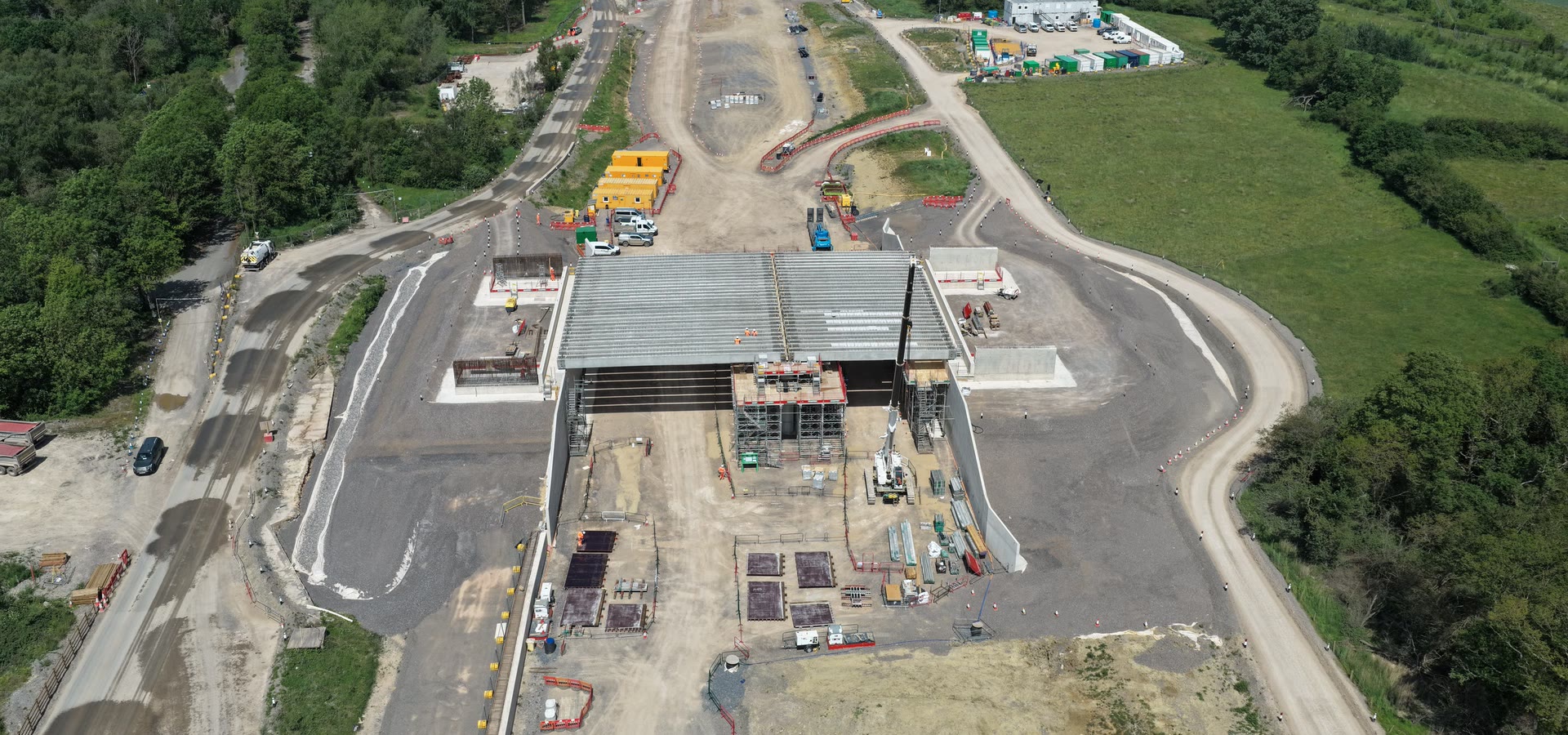
On HS2, HDS monitors a 10km section for EKFB: 16 structures and 3 compounds captured bi-weekly, with over 1,000 images a month and structured video reports delivered to a fixed rhythm. That same discipline scales down to a single site and up to a whole corridor.
- Rail and highway schemes
- Structures and bridges
- Earthworks and enabling packages
- Buildings and compounds
- Utilities corridors
- Demolition programmes
- Infrastructure schemes and structures
- Building construction
Monthly & contractor reporting
Monthly aerial progress reporting delivers a structured visual report to the same standard, on the same date logic, every month: the simplest way to keep clients, boards and site teams aligned on what has actually been built.
The value of monthly reporting is its reliability: same routes, same structure, same delivery date logic, month after month. HDS builds each report from structured aerial capture, annotated against the programme's own milestones.
Reports are made to be used: concise, visual and consistent, with the full image archive behind them for anyone who needs to dig deeper.
- Main contractor monthly reports
- Client-side assurance
- JV and consortium reporting
- Framework performance evidence
- Section and package reporting
- Handover documentation
- Civils and infrastructure packages
- Groundworks and substructure verification
Time-lapse
Aerial time-lapse condenses months of construction into a compelling visual record: the same viewpoints captured visit after visit, aligned into sequences that show the programme actually happening.
Time-lapse works because of discipline: identical framing, consistent light management and a fixed rhythm. HDS captures matched aerial viewpoints on every visit and aligns them into smooth progress sequences.
The result serves two audiences at once: delivery teams get a comparable visual record, and comms teams get the most engaging content a project produces.
- Bridges and structures
- Earthworks and enabling works
- Buildings and plants
- Demolition sequences
- Compound establishment
- Whole corridors
Project documentation & QA photography
Aerial project documentation builds the permanent record of a scheme: baseline, milestones, as-built condition and everything between, captured consistently and archived so it can be found years later.
Projects generate photos; few generate records. Documentation is different: structured capture at defined moments (baseline, milestones, closures, completion), archived with enough discipline that the right image can be found in minutes, years later.
HDS builds that record from the air and the ground: consistent, referenced, and organised around the programme rather than around whoever had a phone that day.
- Full scheme documentation
- Structures and bridges
- Third-party interfaces and boundaries
- Utilities and diversions
- Temporary works
- Public realm and reinstatement
- Reinforcement and formwork
- Bridge decks, bearings and joints
From desktop review to delivered data.
Agree the rhythm
Weekly, fortnightly or monthly visits, the areas that matter and who needs the outputs.
Fix the routes
Repeatable flight routes and camera positions so every visit lines up with the last.
Capture on site
Stills, video and mapping flights around live works, without stopping the job.
Compare and annotate
Changes since the last visit marked up against programme and design.
Share the record
A dated visual record your delivery, commercial and stakeholder teams can all open.
What you receive.
- Structured video reports on a fixed rhythm
- Searchable progress image record
- Month-on-month comparisons
- Milestone documentation
- Secure cloud access for all teams
- Fixed-format progress report (PDF and web)
- Repeatable aerial image set
- Annotated milestone highlights
- Structured video report where commissioned
- Secure cloud archive of every issue
Why clients switch to drones.
- Every visit directly comparable with the last
- Proven bi-weekly across 10km of HS2
- One record for delivery, commercial and comms
- Evidence for valuations and claims
- Zero disruption to site activity
- 100% safety record across all programmes
Safe by design, never over live traffic.
- Routes planned around cranes, plant movements and exclusion zones
- Briefed into the site shift with your supervisors
- Fewer people walking live construction areas
Carbon
One small team in one vehicle replaces repeated site walks and survey vehicle movements on every update, so a whole programme of monitoring has a fraction of the footprint.
Productivity
A site that takes a day to walk is captured in an hour or two, on a fixed rhythm, so reports land on time and nobody has to chase photos.
Recent projects.
Questions clients ask.
How often should we capture?
Whatever rhythm the programme needs: bi-weekly on HS2 for EKFB, monthly on many schemes. Agreed at desktop review and held.
How do you keep visits comparable?
Fixed routes and a structured capture plan, every visit.
Will flights disrupt the site?
No. Capture is planned around live construction under agreed protocols, with a 100% safety record to show for it.
Can monitoring start mid-programme?
Yes. The first visit sets the baseline.
Who uses the outputs?
Delivery, commercial, planning and comms teams, all from the same record.
What makes the reports structured?
Same views, same order, same referencing every issue, so month-on-month change is directly visible.
Who writes the commentary?
HDS drafts against your milestones; your team reviews before issue where required.
- CAA Operational Authorisation
- Site-specific RAMS on every job
- GVC and A2 CofC pilots
- CSCS, T1/T2 trained crew
- £10m public and employers liability
- Never over live traffic
Set up monitoring for your scheme.
Tell us the site, the visit rhythm and who needs the outputs, and we will plan the routes and price the programme.