

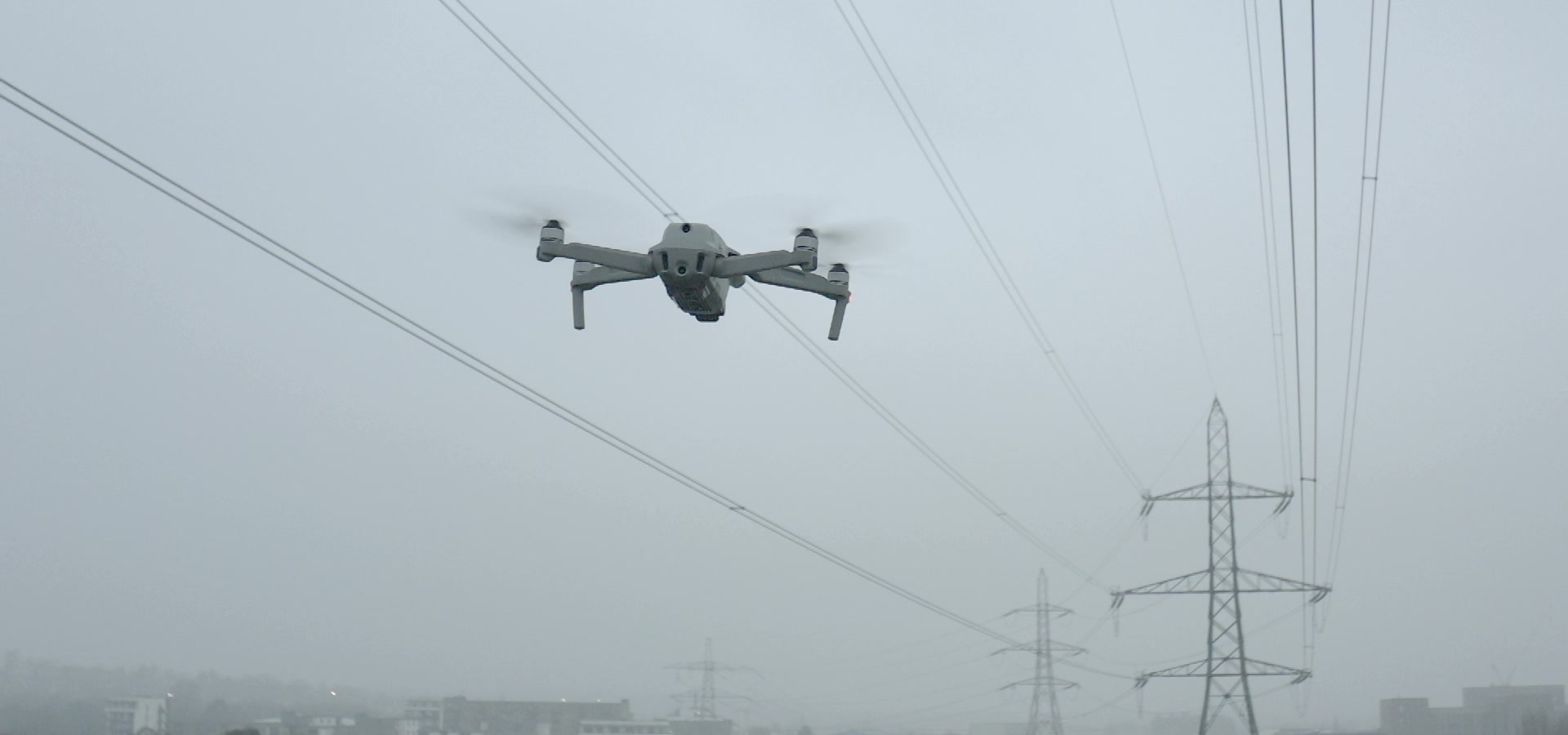
Thermal infrastructure inspections
Heat, moisture and failure patterns the naked eye cannot see.
Radiometric thermal inspection reveals what visual capture cannot: moisture ingress, insulation failure, electrical hot spots and delamination, captured from the air and interpreted against calibrated temperature data.
Thermal finds problems while they are still cheap: a damp patch before it is a failed deck, a warm joint before it is an outage. The survey typically costs less than a single day of the access it replaces.
Explore a thermal inspection
Click a point to see what thermal and visual capture finds on energy and electrical assets.
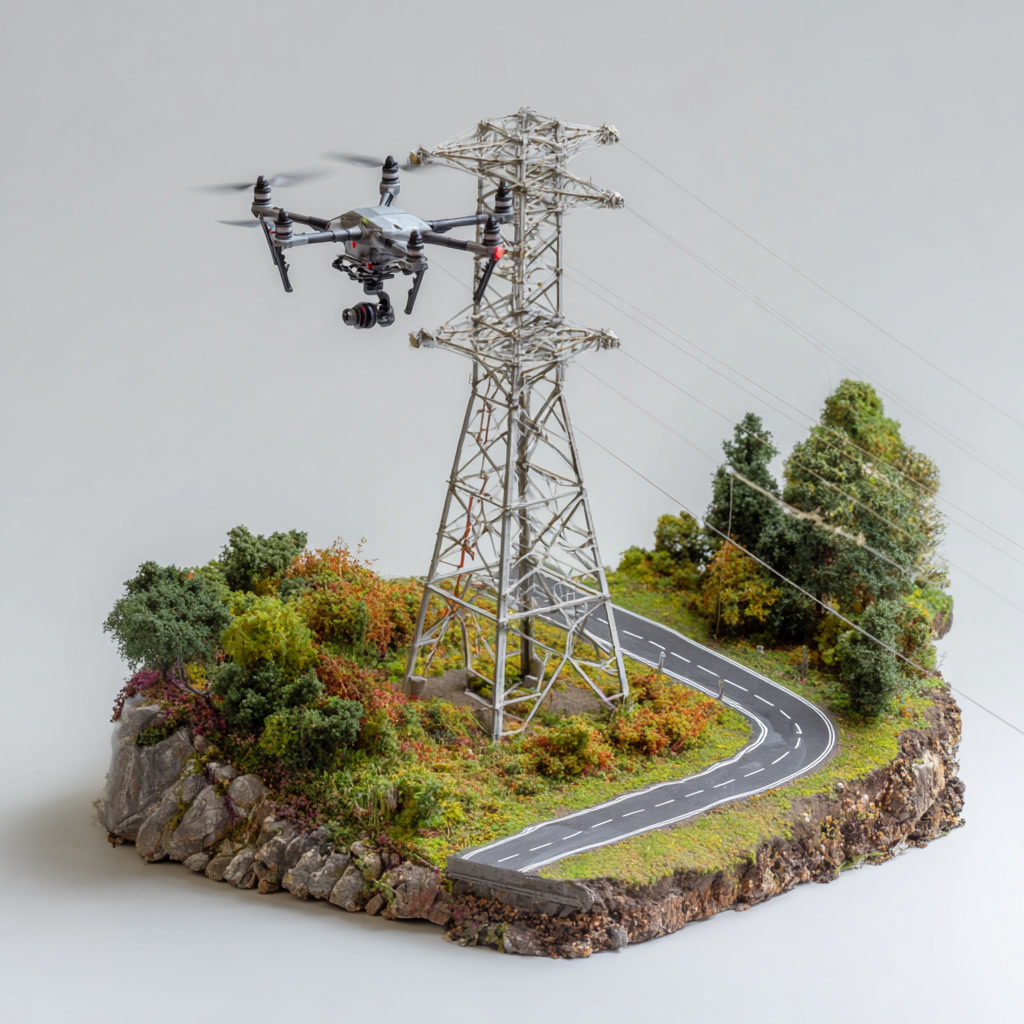
Thermal & visual payload
Radiometric thermal and high-resolution visual imagery captured together, so every hot spot can be located on the visual record.
You receive: Paired thermal and visual images
Insulators & fittings
Damaged insulators, failing fittings and hot joints spotted at height without climbing or outages.
You receive: Hot-spot report with temperatures
Conductors & connections
Thermal anomalies along conductors and connections highlight resistance faults before they fail.
You receive: Located anomaly log
Structure condition
Lattice members, bolts and corrosion recorded on the visual pass for structural assessment.
You receive: Structural condition images
Vegetation encroachment
Vegetation growing towards lines and structures mapped so clearance can be planned before it becomes a hazard.
You receive: Vegetation clearance notes
Access & surroundings
Access routes and the wider corridor recorded to plan maintenance visits and safe working.
You receive: Corridor overview
Thermal inspections
Radiometric thermal inspection reveals what visual capture cannot: moisture ingress, insulation failure, electrical hot spots and delamination, captured from the air and interpreted against calibrated temperature data.
Many failure modes announce themselves in temperature long before they are visible: water tracking behind cladding, failing joints, overloaded connections, delaminating decks. Radiometric thermal capture records calibrated temperature per pixel, not just pretty colours.
HDS flies thermal and visual sensors together, so every anomaly is located, cross-referenced against the visual record and reported with the context an engineer needs to act.
- Bridge decks and expansion joints
- Flat and membrane roofs
- Solar arrays and electrical plant
- Building fabric and cladding
- District heating and buried services
- Substations and switchgear (external)
From desktop review to delivered data.
Define the question
Moisture, heat loss, electrical faults or drainage, and the assets involved.
Plan for conditions
Flights timed for the temperature difference that makes defects show.
Capture
Calibrated thermal and visual imagery taken together.
Interpret
Anomalies identified and explained, not just coloured images.
Target the follow-up
Clear locations for intrusive investigation or repair.
What you receive.
- Radiometric thermal image set with visual pairs
- Anomaly log with locations and temperature data
- Interpreted findings report
- Repeat-survey comparison where commissioned
- Secure cloud delivery
Why clients switch to drones.
- Finds failures before they are visible
- Calibrated temperature, not just colours
- Thermal and visual captured together
- Interpreted reports, not raw data
- Conditions-planned for maximum contrast
- Targets intrusive investigation precisely
Safe by design, never over live traffic.
- No one on roofs or near live electrical equipment
- Hidden defects found without opening up structures
- Capture from safe standoff distances
Carbon
Finding the fault from the air means intrusive investigation and repair crews only go where the thermal data points them.
Productivity
Large roofs, structures and electrical assets scanned in a single visit, so hidden defects are found before they fail.
Questions clients ask.
Is the imagery radiometric?
Yes, calibrated temperature per pixel, so anomalies are measured, not just coloured.
When are thermal surveys flown?
Conditions matter: many surveys fly at dawn, dusk or after rain to maximise contrast. We plan this for you.
Can thermal find water in a bridge deck?
Moisture and delamination indicators are detectable under the right conditions; findings guide targeted investigation.
Do you interpret the data?
Yes, reports are interpreted findings with temperature evidence, not raw image dumps.
Can thermal combine with visual inspection?
Always, both sensors fly together as standard.
- CAA Operational Authorisation
- Site-specific RAMS on every job
- GVC and A2 CofC pilots
- CSCS, T1/T2 trained crew
- £10m public and employers liability
- Never over live traffic
Find hidden defects.
Tell us the asset and what you suspect, and we will plan the thermal survey for the right conditions.