

Highways lighting & high mast inspections
Column-top detail without a single MEWP, captured across whole networks at pace.
Aerial inspection records lantern, bracket and column condition in high resolution without MEWPs, lane closures or night working, giving lighting teams a fast, consistent condition record across entire networks.
Lighting columns are inspected for structural condition, corrosion, lantern damage and bracket integrity. Doing that with a MEWP means traffic management, two-person crews and a handful of columns a day. Aerial capture removes the plant and the closures, and turns weeks of inspection into days.
Explore a lighting inspection
Click a point to see what we capture on lighting assets across a network, and what your lighting team receives.
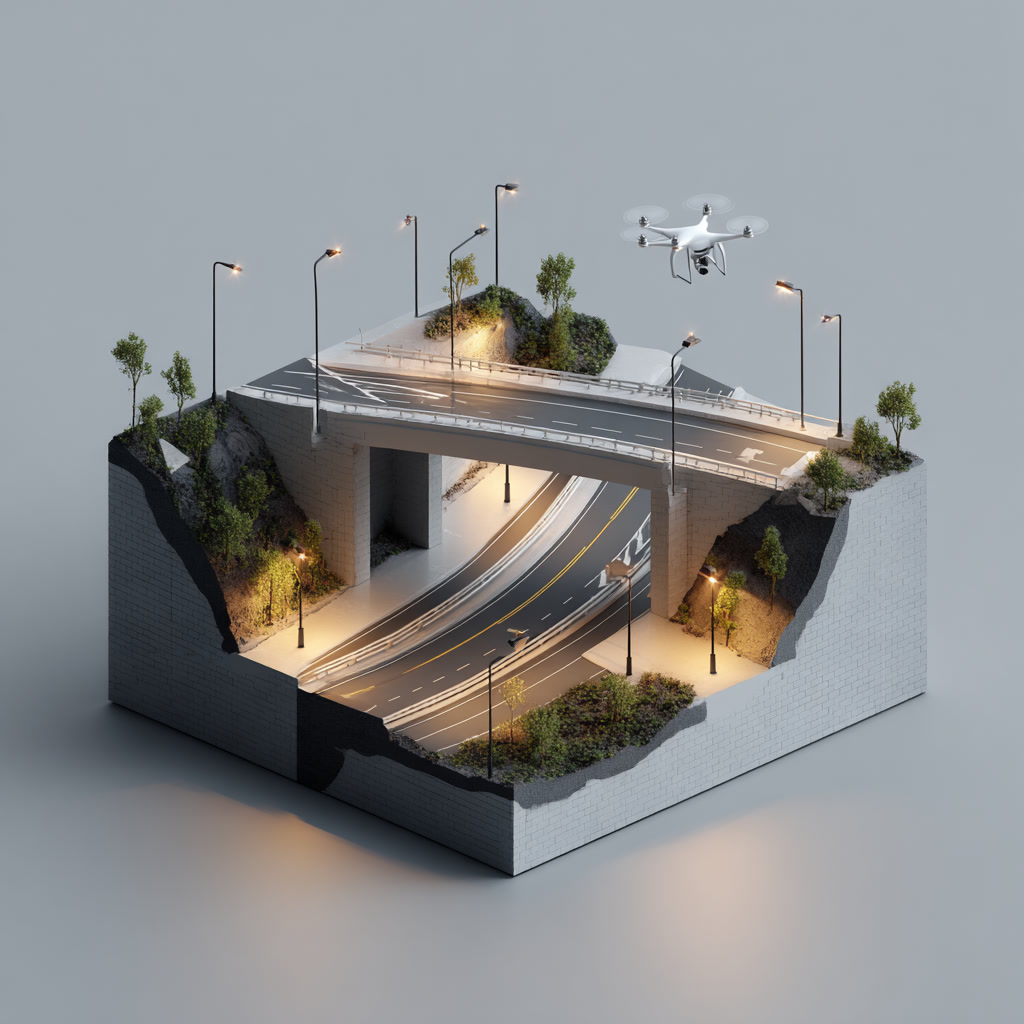
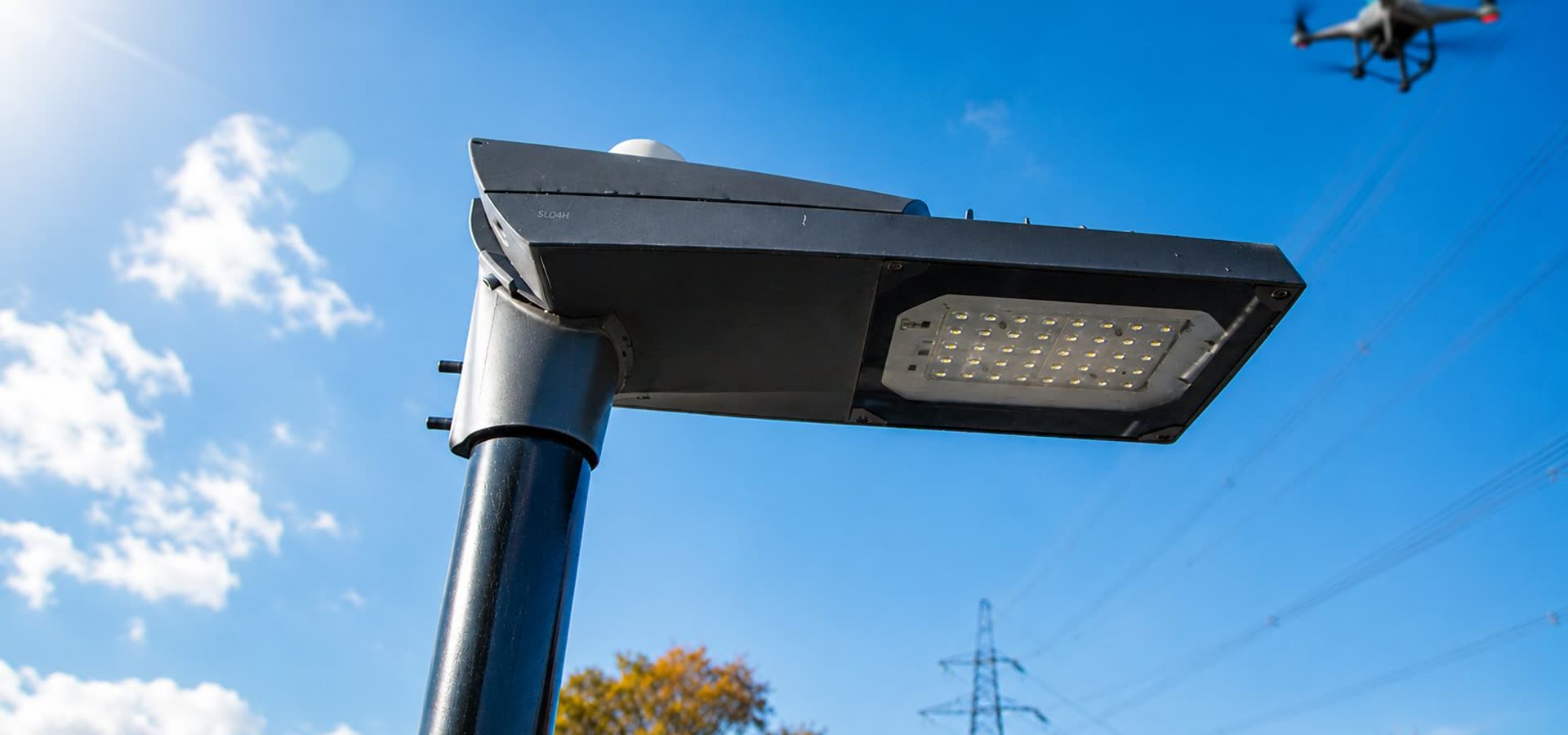
Column-top capture
The drone holds position beside each column head, recording lantern, bracket and fixings in close detail from the footway or verge, never over live traffic.
You receive: Column-by-column image record
Lanterns & LED upgrades
Lantern type, condition, bowl damage and photocells logged, giving the evidence base for LED upgrade programmes.
You receive: Lantern inventory and condition
Brackets & fixings
Bracket corrosion, cracking, loose or missing fixings and nodes captured, detail a ground survey cannot see.
You receive: Defect log with severity flags
Lighting on structures
Columns and fittings on bridges and overbridges inspected without a MEWP on the deck or a lane closure below.
You receive: Structure-mounted asset records
Underpass & subway lighting
Lighting in underpasses and beneath structures recorded alongside the structure itself, in the same visit.
You receive: Combined structure and lighting record
Network referencing
Every column is matched to your asset list or GIS, with OSID and node data captured where needed for CMS integration.
You receive: CMS-ready OSID data
Watch the work.
Lighting PFI ending soon?
The first 25-year street lighting PFIs end in 2028. We build the asset-by-asset photo record and inventory a handback needs, for the authority, the PFI contractor, or both.
See how handback surveys work
Street lighting and high mast drone inspection checklist
A column-by-column checklist for lighting teams, plus how drone inspection captures it without MEWPs, closures or night working.
Download the PDFStreet lighting columns
Aerial inspection records lantern, bracket and column condition in high resolution without MEWPs, lane closures or night working, giving lighting teams a fast, consistent condition record across entire networks.
Street lighting stock runs to thousands of columns per authority, and traditional inspection means MEWPs, traffic management and slow progress. HDS captures column tops, lanterns, brackets and fixings from the air, in detail a ground survey cannot match.
Each column is recorded to a consistent standard and referenced to your asset list, so condition, defects and missing or damaged components can be reviewed at a desk and prioritised across the network.
- Residential and main-road column networks
- High mast lighting
- Heritage columns
- Car park and amenity lighting
- Sign and signal poles
- CCTV columns
High mast lighting
Aerial inspection reaches high mast lighting at interchanges, ports and depots without specialist MEWPs or mast lowering, recording lantern carriages, halyards, fixings and mast condition in high resolution.
High mast lighting is tall enough that routine inspection usually means specialist access plant or lowering the carriage, both slow and expensive. Most masts are simply left until something fails.
HDS captures the full mast from the air: lantern carriage, lanterns, halyard systems, davit arms, flange connections and the mast shaft itself. Corrosion, fatigue indicators and damaged components are logged against each mast for desk-based review.
- Motorway interchange high masts
- Port, airport and rail yard lighting
- Depot and stadium masts
- Lantern carriages and lanterns
- Halyard and winch systems
- Flange connections and foundations
Traffic signals & roadside electrical assets
Aerial inspection records signal heads, brackets, poles and mast arms in high resolution while the junction keeps running, replacing bucket-truck visits and giving signals teams a consistent condition record across whole routes.
Signal infrastructure sits directly over live traffic, which makes routine close inspection disruptive: a MEWP at a junction means closures, queues and complaints.
HDS captures each installation from the air: head alignment, bracket and fixing condition, pole corrosion, cable management and general state. Imagery is referenced to your site numbers, and route-wide programmes run in days rather than weeks.
- Junction signal installations
- Pedestrian crossings
- Mast arm and cantilever heads
- Speed and enforcement camera poles
- VMS and matrix signs
- CCTV poles
From desktop review to delivered data.
Load the inventory
Your column list, routes and the condition criteria your engineers grade against.
Plan the routes
Shift routes worked from the footway with no lane closures or IPV.
Capture column heads
Lanterns, brackets, fixings and column tops photographed close up.
Tag to assets
Every image tied to the column ID, ready for grading.
Load to your system
Records delivered for your asset management system or GIS.
What you receive.
- Column-by-column image record referenced to your asset list
- Defect log with severity flags
- High-resolution lantern and bracket imagery
- Summary condition report
- Secure cloud access for your team
- Mast-by-mast image record
- High-resolution carriage and fixing imagery
- Summary condition report with priority recommendations
- Secure cloud access
- Site-by-site image record referenced to your numbering
Why clients switch to drones.
- No MEWPs, no traffic management, no night working
- Column-top detail ground teams cannot see
- Whole networks captured in days
- Imagery referenced to your asset list
- Consistent standard across every column
- Evidence for upgrade and maintenance programmes
Safe by design, never over live traffic.
- No operatives at height in a MEWP basket
- No impact protection vehicle parked in live lanes
- Flown from the footway with a marked take-off area
Carbon
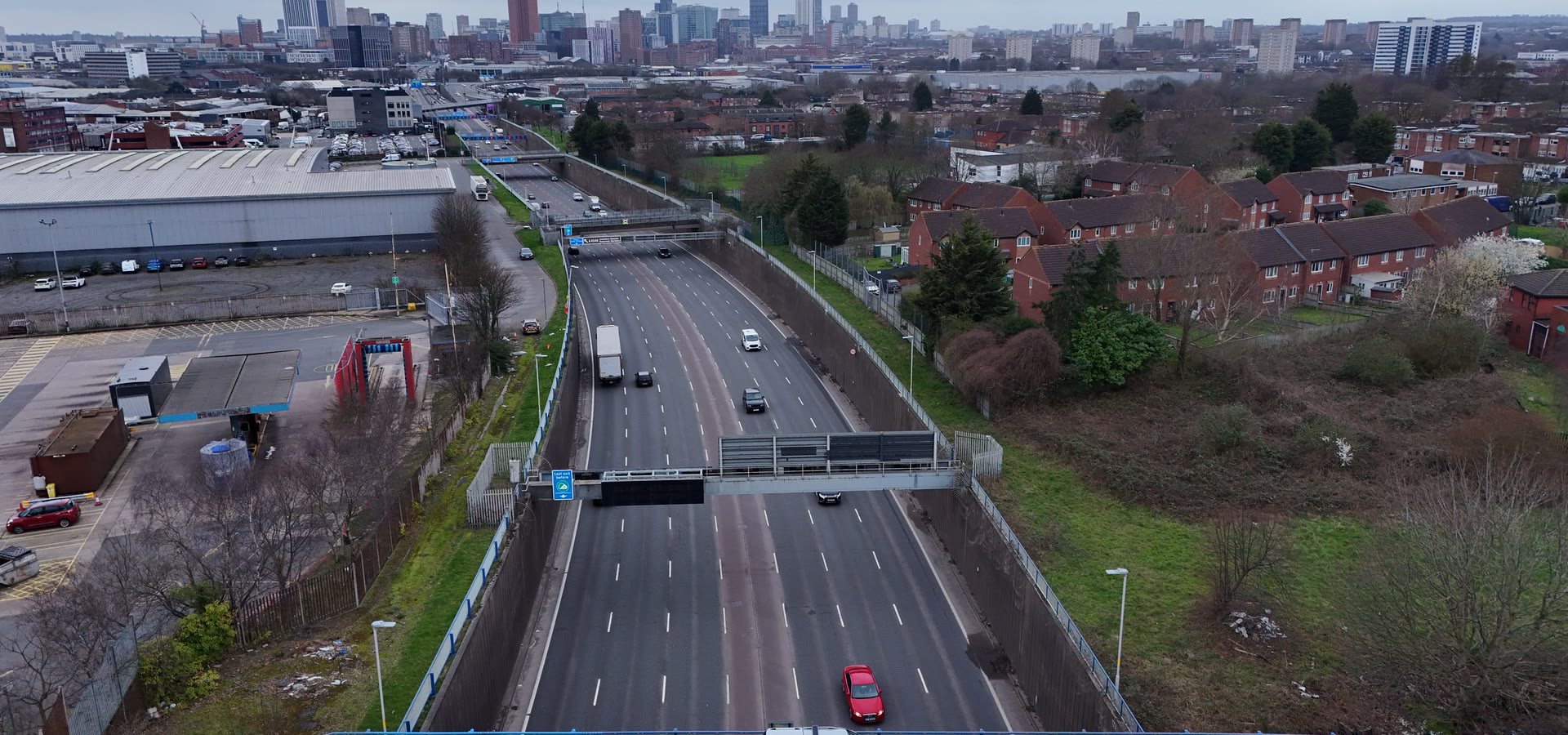
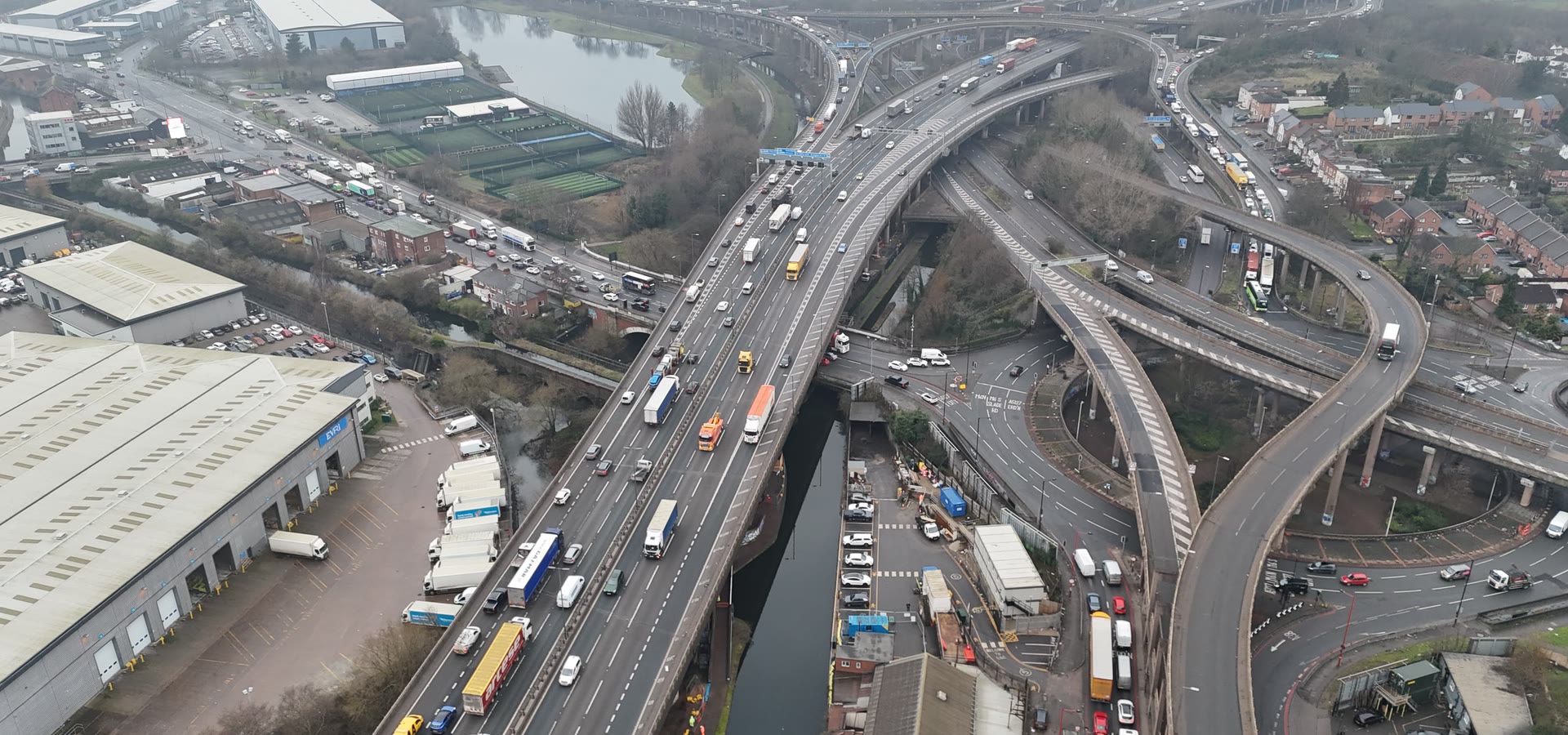
In Birmingham the drone method cut survey CO₂ by 93.5% against the MEWP, IPV and dropside set-up it replaced.
Productivity
Around 75 columns a shift against 14.5 by the traditional method on the Birmingham programme, more than five times the output.
Recognised by the industry.
- Winner Innovation Award CECA Midlands Awards 2026
- Finalist Technology and Digital Transformation CIHT Awards 2026
- Highly Commended Safety Initiative HEA Awards
- Highly Commended Best Use of New Technology Highways Awards 2025
Using HDS allowed us to remove traffic management and road closures from many inspections, reducing disruption, noise and impact on local communities.
Questions clients ask.
How many columns can you capture in a day?
Substantially more than a MEWP crew. Exact rates depend on spacing and airspace, and are confirmed at desktop review.
Do you need traffic management?
Generally no. Columns are captured from the verge with the road live, never flying over traffic.
Can you match our asset numbering?
Yes. Imagery is referenced to your existing asset list or GIS.
Can this support an LED upgrade programme?
Yes. The same capture records lantern type and condition across the network.
What about high mast lighting?
High mast sites are ideal aerial subjects and are included in the same programme.
Can you see the top of a 30m mast?
Yes, in better detail than a MEWP basket, and from angles plant cannot reach.
Do masts need to be isolated?
No. Capture is non-contact and masts stay in service.
- CAA Operational Authorisation
- Site-specific RAMS on every job
- GVC and A2 CofC pilots
- CSCS, T1/T2 trained crew
- £10m public and employers liability
- Never over live traffic
Inspect your lighting stock.
Send us the column count and area, and we will plan the routes and price the programme.