Every MEWP inspection beside a live road combines the two biggest hazards on the network: height and traffic. In Birmingham, a drone flown from the footway proved a practical MEWP alternative for highway inspections, covering 751 lighting columns in the time a MEWP crew covered 145.
At a glance
- IPAF recorded 37 deaths from falls from MEWP platforms on roads and highways over ten years, plus 20 from vehicle strikes and 3 from overturns.
- Birmingham trial: 145 columns by MEWP, 751 by drone, over the same two weeks.
- Scaled up, around 2,800 fewer crew hours in live traffic and roughly 60% lower cost.
- Now business as usual: 13,248 columns surveyed with zero accidents.
The risk the workforce carries
Road safety campaigns rightly focus on drivers and the public. The people maintaining the network get far less attention, yet inspecting assets such as lighting columns has for decades meant putting a crew in a MEWP basket, often in or beside a live lane.
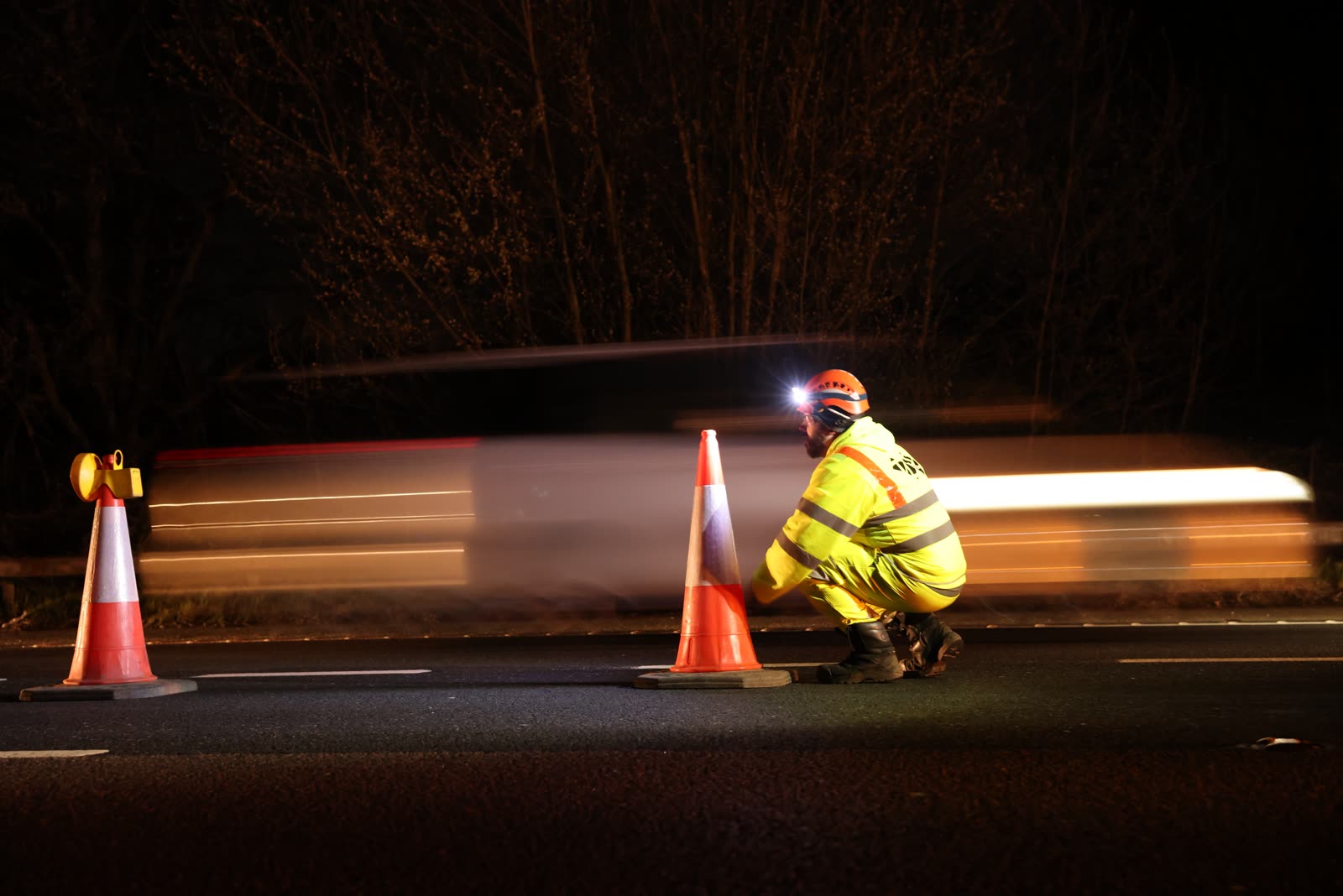
The IPAF figures cited at Road Safety Week make the point. Over the previous ten years, 37 people died falling from MEWP platforms on roads and highways. Strikes from passing vehicles killed 20 more, and overturns another 3. A routine column inspection brings all three causes to the same spot: a raised platform, a heavy vehicle and moving traffic.
What the Birmingham trial compared
Highways Drone Services, Kier and Birmingham City Council set out to cut the time operatives spend at height and in live carriageways. The two-week trial ran both methods on the same network.
| MEWP method | Drone method | |
|---|---|---|
| Vehicles | IPV, MEWP and 3.5-tonne dropside | One light van and a drone |
| Columns inspected | 145 | 751 |
| Average per shift | 14.5 | 75.1 |
| Working at height | Yes | None |
| Vehicle in a live lane | Yes | None |
When the results were scaled to more than 9,000 columns, the projections showed output up 350%, about 2,800 hours saved in live traffic, network exposure down by around 350 working days and total cost down by about 60%. Saving roughly 1 kg of CO₂ per column also took around 9 tonnes of CO₂ out of the process, about the same as burning 3,500 litres of diesel.
Why drones work as a MEWP alternative for highway inspections
The drone method did not reduce the main causes of MEWP fatalities. It removed them:
- No working at height, because nobody leaves the ground.
- No platform to fall from or overturn.
- No large vehicle parked in a live lane for passing traffic to strike.
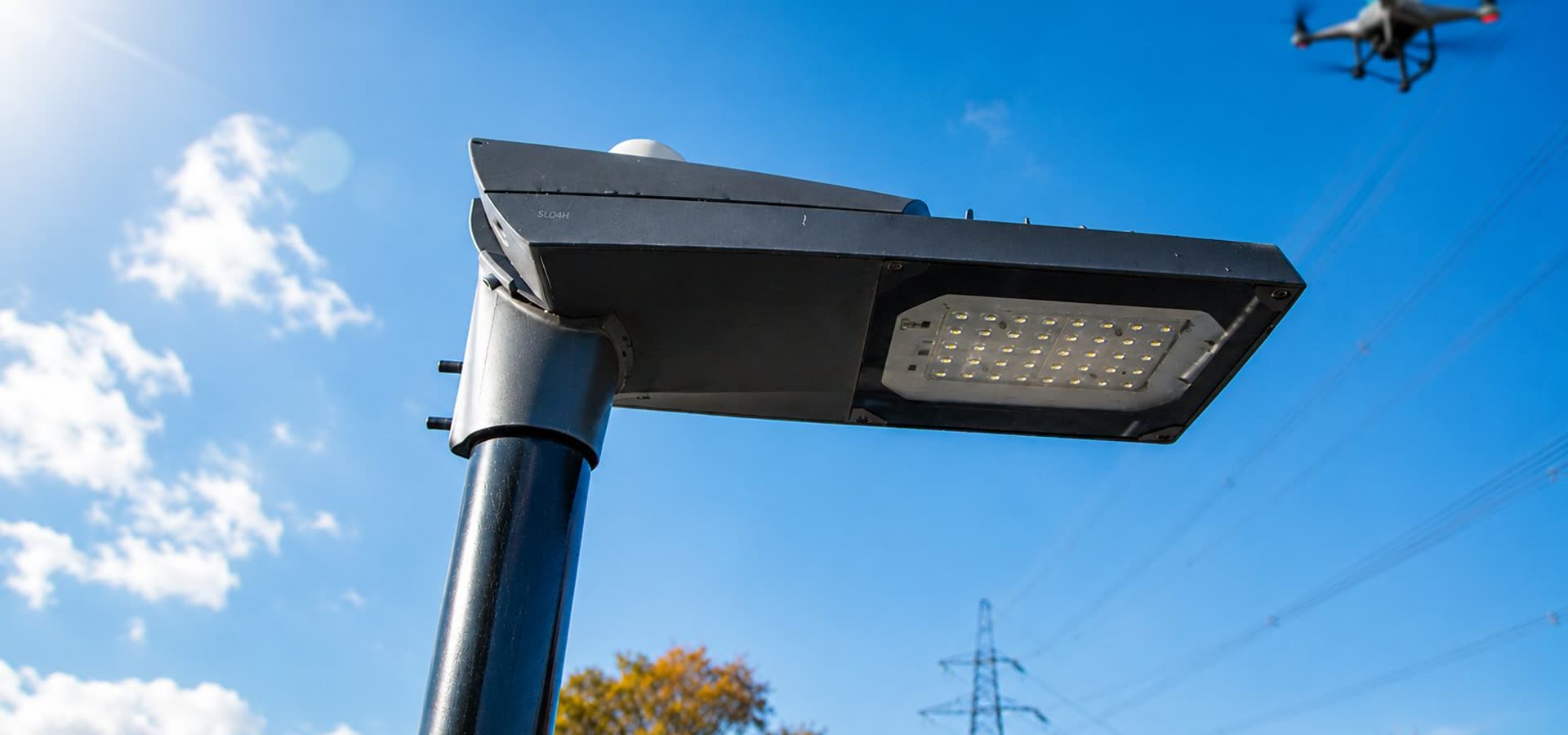
Our pilots work from footways and verges, never over live traffic, from a Chapter 8 compliant mobile base. The aircraft captures brackets, luminaires and column condition close up, and every image is tied to the column ID. In Birmingham the records were processed into a structured, searchable dataset and loaded into the client’s GIS, replacing paper checklists that were too subjective for long-term planning.
From trial to business as usual
The Birmingham programme has since surveyed 13,248 columns with no accidents, injuries or near misses. It was Highly Commended at the HEA Awards and won the CECA Midlands Innovation Award 2026, and the same workflow is extending to bridges, high-mast signage, drainage and retaining walls. Read the Birmingham case study for the full figures.
Other authorities are moving the same way. In Reading we inspected high mast lighting with Milestone Infrastructure to avoid complex traffic management, closures and large lift platforms. Newcastle, Sunderland and Lincolnshire have adopted drones for different inspection tasks.
Where a MEWP still earns its place
A drone replaces the visual inspection, not the hands-on work. Repairs, lantern swaps and structural testing still need access. The difference is that the inspection now tells you which columns genuinely need a visit, so access plant goes where it is needed instead of to every column on the list.
Doing it within the rules
Professional drone work on the network is tightly regulated. Pilots must comply with Civil Aviation Authority requirements and hold valid Flyer and Operator IDs. National Highways has its own standards, such as GG 954, which sets out steps for safe flight on the network. New CAA rules in 2026 introduce Direct Remote ID for professional drones, which raises accountability on critical sites. Every job we run starts with site-specific RAMS and flight planning. For more on method and outputs, see our street lighting inspection guide.
Frequently asked questions
Can a drone replace a MEWP for every highway inspection?
For visual inspection of lighting columns, high masts and many structures, yes. Repairs, lantern replacement and hands-on testing still need physical access, but the drone tells you which assets actually need that visit.
Do drone inspections need lane closures?
Generally no. We fly from verges, footways and compounds, never over live traffic, so there is no vehicle parked in a live lane and no closure to book.
How many columns can a drone team inspect in a day?
In the Birmingham trial the drone team averaged 75.1 columns a shift against 14.5 for the MEWP crew. Exact rates depend on column spacing and airspace, and we confirm them at desktop review.
What rules apply to drones on the highway network?
Operators must meet Civil Aviation Authority requirements, and pilots must hold valid Flyer and Operator IDs. National Highways sets its own standards, including GG 954, and new CAA rules from 2026 bring in Direct Remote ID for professional drones.
If you would like to see the method on your own network, get in touch.