Here is what a drone bridge inspection shows: the parts of a structure that are hardest to reach, from soffits and girders to bearings, high-level fixings and drainage. It records the surface evidence of deterioration, such as cracking, spalling, rust staining and water tracking, in sharp, location-tagged images an engineer can grade at a desk. What it cannot show is anything below the surface.
This post goes element by element through what the imagery reveals and where its limits are. For planning, inspection regimes and costs, see our full drone bridge inspection guide.
At a glance
- Drones capture visible defects on soffits, girders, bearings, joints, parapets and drainage without scaffold, MEWPs or rope access.
- Close-range stills show cracking, spalling, coating failure, corrosion, loose fixings and blocked outlets clearly enough to grade.
- Thermal imaging points to likely moisture and to electrical equipment running hot.
- Repeat flights from recorded positions give a like-for-like comparison at the next inspection.
- Imagery targets hands-on testing. It does not replace it.
What a drone bridge inspection shows on each element
Most highway structures share the same set of elements, and each tends to deteriorate in its own way. This is what close-range imagery typically records.
| Element | What the imagery shows |
|---|---|
| Deck soffit | Cracking, spalling, exposed reinforcement, efflorescence and water staining |
| Girders and steelwork | Paint failure, coating breakdown and rust developing along edges and connections |
| Bearings and bearing shelves | Debris, corrosion and visible signs of movement |
| Expansion joints | Water tracking through to the substructure below a failing joint |
| Piers and abutments | Cracking, surface damage, staining and signs of settlement or scour |
| Parapets, fascias and cladding | Panel displacement, surface damage and loose or missing fixings |
| Drainage | Blocked outlets and spouts, and the staining that shows where water is going instead |
| Setting | Embankments, wing walls and approach roads around the structure |
Concrete defects that show clearly
Concrete gives away a lot of its condition at the surface. Spalling leaves a hard edge and a change of texture that stands out in close-range stills. Where cover has been lost, exposed reinforcement and rust staining sit right beside it. Efflorescence and water staining on a soffit are often the first visible sign that water is getting through the deck, usually at a joint or a failed drainage point above.
Fine cracking is where flight planning matters. A crack that is invisible in a wide shot can be obvious in a square-on image taken from a few metres away. That is why we plan the inspection element by element, with the engineer’s concerns from the last report in hand, rather than flying a general orbit and hoping.
Steelwork, bearings and joints
On steel structures the story is mostly about coatings. Imagery shows paint failure, rust bloom along edges and around bolted connections, and the point where surface corrosion looks advanced enough to deserve a closer, hands-on look. Loose or missing fixings on brackets, cladding and parapet connections are easy to log because every image carries its location.
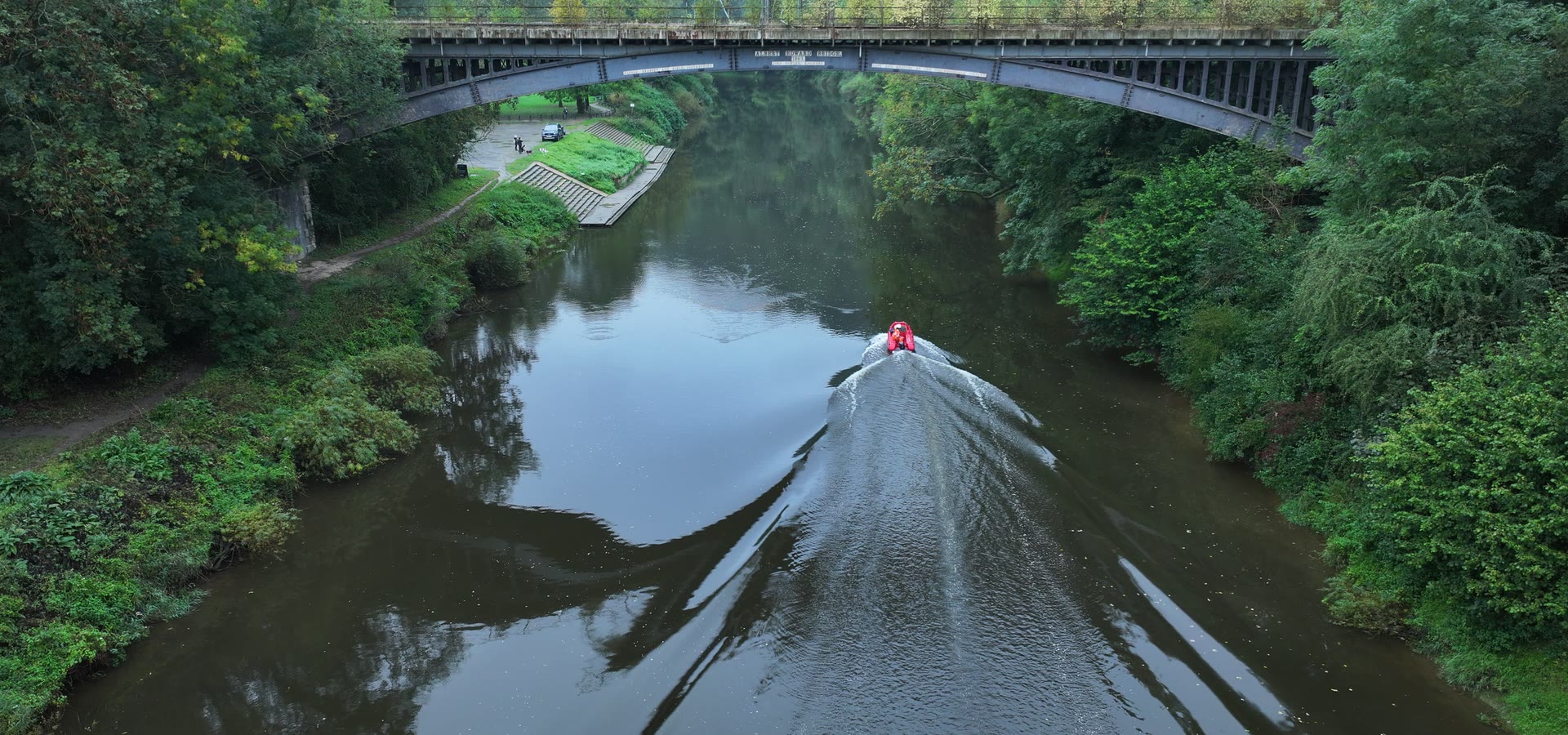
Bearings are where a drone earns its keep. Bearing shelves sit in the least accessible part of most bridges, and they collect debris, water and corrosion. A drone can hold a clear side-on view of the shelf and bearing without anyone climbing or an under-bridge unit being booked.
Expansion joints are best judged from below. A leaking joint shows itself as staining and water tracking down the abutment face or onto the bearing shelf, and that pattern is easy to follow in a sequence of stills.
Drainage and the wider setting
Blocked drainage sits behind a surprising share of deck deterioration, and it is one of the easiest things to spot from the air: outlets choked with debris, spouts discharging onto the structure rather than clear of it, and staining that shows where the water actually goes.
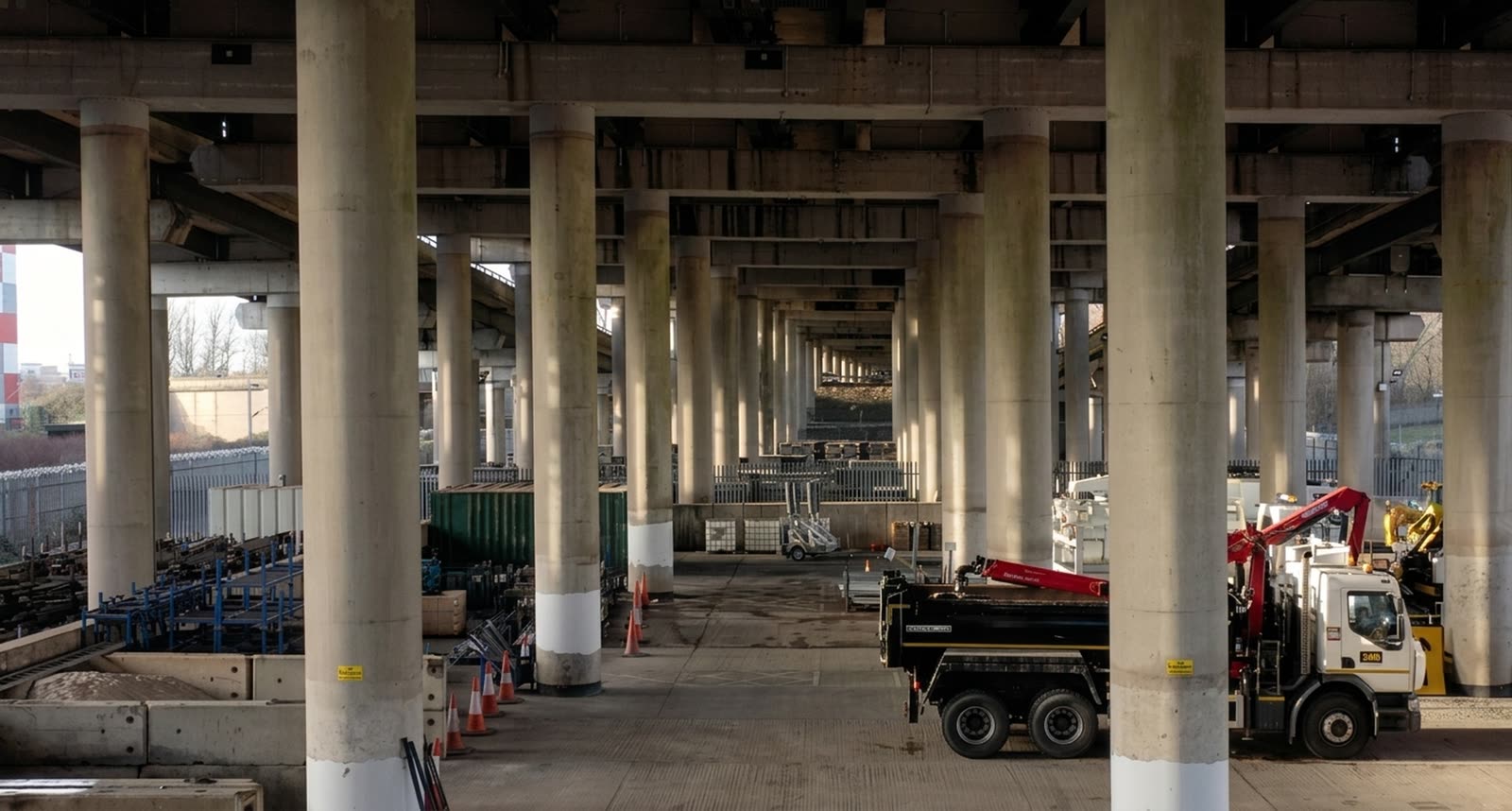
A drone also captures the context that close inspection can miss. Embankments, wing walls, approach roads and the ground around piers all appear in the same survey, so engineers can see how the structure interacts with its surroundings as well as the individual defects.
Thermal imagery: what it adds
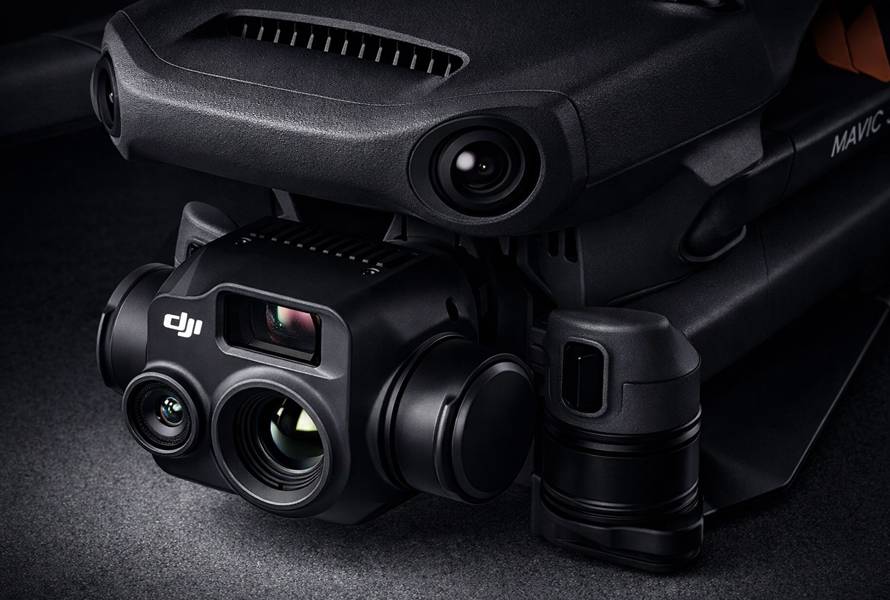
A thermal camera records temperature differences, not defects. On structures that is useful in a few specific places: moisture behind render or cladding, joints letting water in, and electrical equipment on gantries and lit signs that is running hot. It tells the engineer where to look harder. It is not a substitute for intrusive testing. See our thermal inspection service.
What the imagery cannot show
- Anything behind the surface, such as the condition of reinforcement under sound-looking concrete
- How a bearing performs under load
- The results of hammer tests, cores or samples
- Elements hidden from every viewpoint, such as the inside of closed sections
The practical value is that expensive, disruptive access gets booked only where the imagery says it is needed, rather than across the whole structure by default.
How the images reach the engineer
Stills are organised by element and location so the inspector can grade them against their usual criteria and drop them into a General or Principal Inspection report. Video passes give context for anyone who was not on site. Where geometry matters, overlapping imagery is processed into an orthomosaic or a measurable 3D model.
Often the most valuable output is the next inspection. Because flight positions are recorded, the same views can be captured again, which turns “is that crack getting worse?” into a side-by-side comparison. The same discipline runs through our HS2 Calvert work for EKFB, where 16 structures and 3 compounds are captured on a fixed rhythm, visit after visit.
All of this is flown from verges, footways and compounds, never over live traffic. More detail is on our bridge and structure inspection service page.
Frequently asked questions
Can a drone replace a Principal Inspection?
No. A drone provides the visual evidence for General and Principal Inspections and helps decide where hands-on access is needed, but it does not tap concrete, take cores or test bearings. A qualified engineer still makes the assessment.
How small a crack can a drone inspection pick up?
It depends on stand-off distance, camera and light. Close, square-on flights pick out hairline cracking clearly enough to grade, which is why we plan the flight around the elements and defects your engineer needs to see.
Do you need a lane closure to inspect a bridge?
Often not. We fly from verges, footways and compounds and never over live traffic, so many structures can be captured without an under-bridge unit or a lane closure.
Can thermal imaging find hidden defects in a structure?
Thermal imaging shows temperature differences that can point to moisture ingress, leaking joints or overheating electrical equipment. It tells engineers where to investigate further rather than confirming a defect on its own.
If you have a structure coming up for inspection, tell us about it and we will say plainly what a drone can and cannot cover.