

Culvert inspections and a culvert record that lasts
Capture once. Everything else happens in the browser.
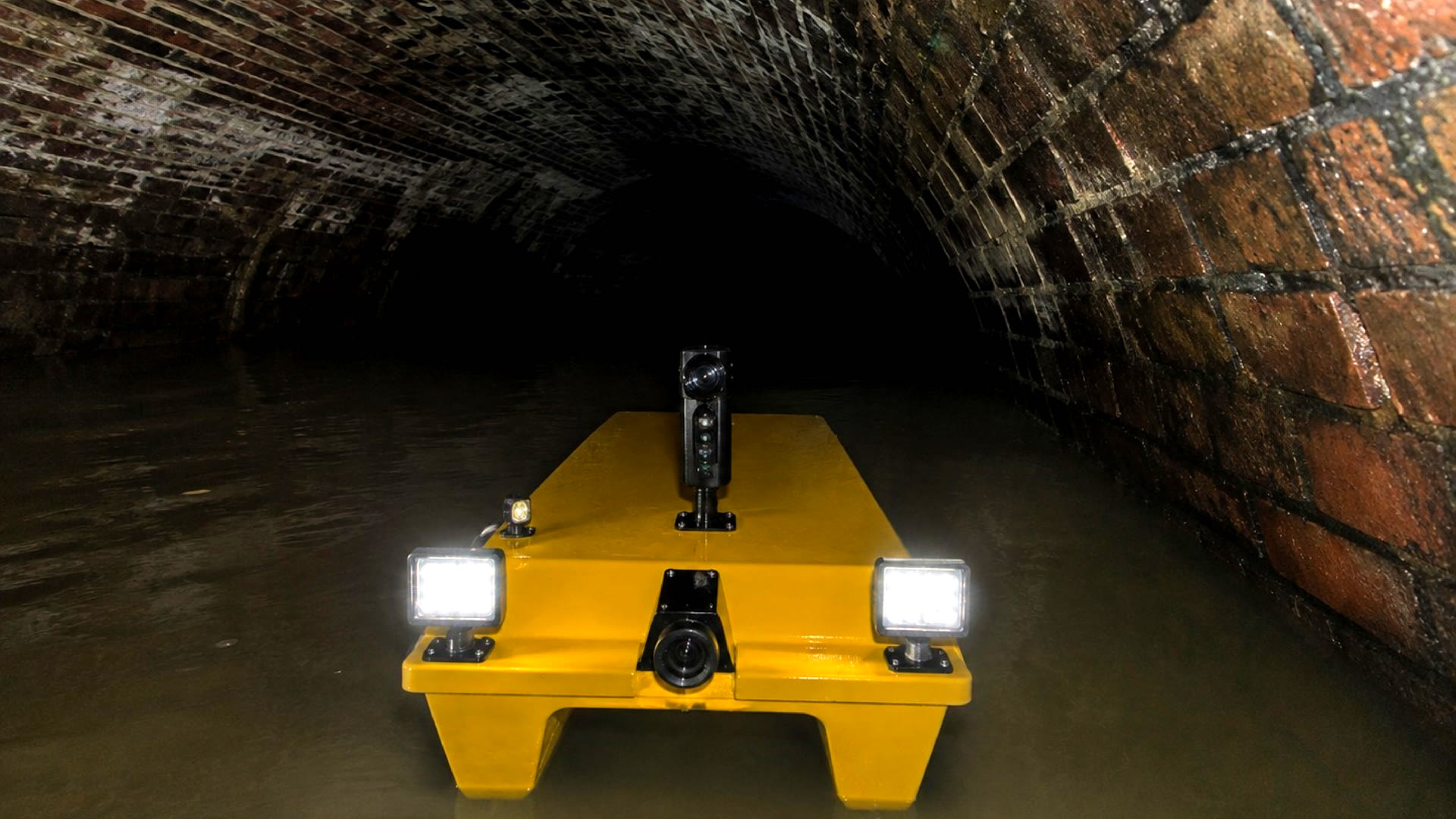
A camera and lighting vessel travels through the culvert while the team stays on the bank. The footage goes straight onto the structure record, defects are flagged and graded on screen, and your engineers open the same evidence in a browser.
A culvert survey usually ends as a hard drive in the van and a written report that is emailed and filed. Two years later the next survey starts from scratch. Here the survey becomes a record: footage, findings and report held together, and the next visit compares straight back to this one.
The survey
A camera and lighting vessel travels through the barrel, so nobody enters the confined space and no rescue standby is needed.
The vessel records in 360 degrees, so the crown, springing, both haunches and the invert are captured in one traverse.
The team works from the bank of the watercourse. The full footage is kept, not just a summary, so it can be checked again years later.
- Brick arch culverts
- Box and pipe culverts
- Watercourse crossings
- Highway drainage runs
- Pre and post storm checks
The platform
Every survey becomes a proper record your engineers open in a browser. No app and no specialist software.
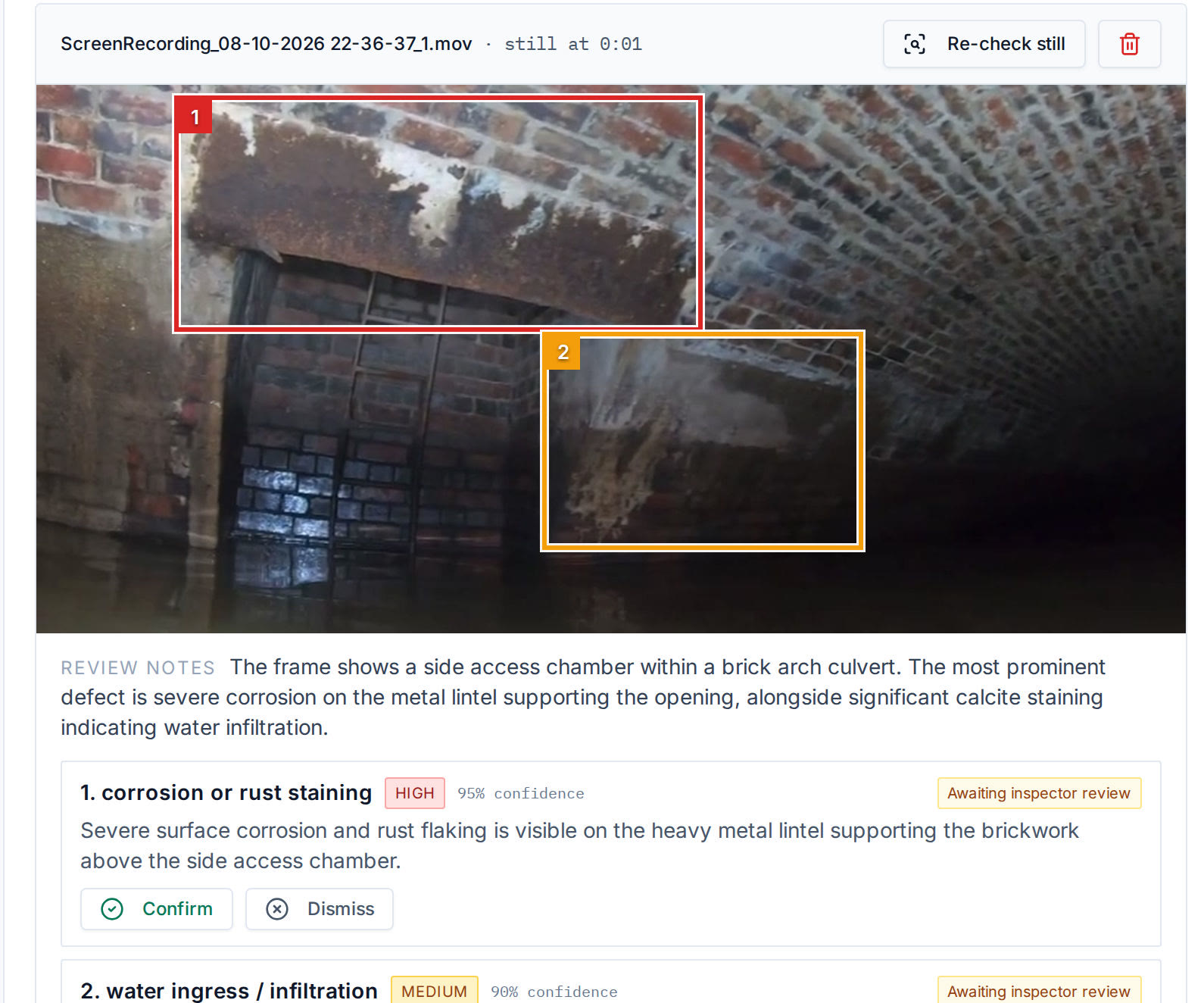
Pause the footage, capture the still, and the system boxes what it can see and grades it: water ingress, corrosion, root intrusion, mortar loss and calcite staining. Each finding has a severity and a confidence score, located by a numbered box on the still.
Nothing is automatic. Every finding sits as awaiting inspector review until a qualified person confirms or dismisses it. The draft report is marked as a draft until it is signed off.
Clients sign in to a portal and see only their own structures, on a desktop or a tablet on site. Jobs stay hidden until they are released, with no file transfers and no expiring links.
- 360 capture
- Defect flagging
- Inspector sign-off
- Draft PDF report
- Client portal
A worked example
A real brick arch culvert in Luton, surveyed and written up through the platform.
Six stills were reviewed and ten defects flagged, from corrosion on a metal lintel to water ingress and root intrusion, and the platform produced a seven page draft report for the inspector to check and sign off.
What comes next
The platform is built and running today. These are the next steps we would build with a client.
Chainage referencing, so every finding is tied to a measured position along the barrel. Export to asset systems such as Confirm, Alloy, WDM, Symology or Mayrise, with no rekeying. A map view of structures by condition. Repeat visit comparison on the same still, this year against last. Headwalls, outfalls and other structure types, in your own format and severity scheme.
F r
Capture
Camera and lighting go in on the vessel. Nobody enters the culvert.
Upload
Footage is attached to the structure record, not a file on a drive.
Review
Defects are flagged on the stills. The inspector confirms or dismisses each one.
Report
One click builds a branded draft report with the marked-up images carried through.
Release
The status changes and the client signs in to see their structures.
What you receive.
- Full 360 footage attached to the structure record
- Marked-up stills with numbered defects
- Findings graded high, medium or low with confidence scores
- Draft PDF inspection report for sign-off
- Client portal access to your own structures
Why clients switch to drones.
- Nobody enters the confined space
- Crown to invert in one traverse
- Evidence time stamped and kept for years
- Look first, then spend the CCTV budget where it is needed
- One format across every region
- Released as it is done, not all at the end
Safe by design, never over live traffic.
- No confined space entry for the survey
- Team works from the bank of the watercourse
- Answers whether entry was necessary under the Confined Spaces Regulations
Carbon
No confined space entry means no permit set-up, no rescue standby team and fewer repeat visits, so smaller crews spend less time on site.
Productivity
The report writes its own first draft from the reviewed stills, so the inspector spends their time checking findings, not typing them up.
Questions clients ask.
Does anyone go into the culvert?
No. The camera and lighting go in on the vessel and the team stays on the bank.
Is the defect flagging automatic?
No. The system suggests findings, but each one stays as awaiting inspector review until a qualified person confirms or dismisses it.
What do clients need to view the results?
A web browser. Each client organisation signs in and sees only its own structures, including on a tablet on site.
Do we get the footage or just a report?
Both. The full footage stays on the record with the findings and the report, so it is still there for the next survey or a claim.
Can it export to our asset system?
Export to systems such as Confirm, Alloy, WDM, Symology and Mayrise is the next step on the roadmap, built with the client.
- CAA Operational Authorisation
- Site-specific RAMS on every job
- GVC and A2 CofC pilots
- CSCS, T1/T2 trained crew
- £10m public and employers liability
- Never over live traffic
See inside your culverts.
Send us a culvert list and we will show you a live run through of the platform on a real survey.