

Hand back a lighting PFI with evidence for every asset.
A photo record and inventory of every column, lantern, sign and bollard, matched to the contract schedule and graded to the handback standard.
More than 30 English councils signed 25-year street lighting PFI contracts between 2000 and 2013. The first end in 2028, and the work that decides how they end is happening now.
At handback the authority takes the network back, and with it any missing assets, wrong records and defects nobody spotted. The contractor has to show the network meets the standard in the agreement. Both depend on the same thing: a complete, trusted record of what is on the street and what condition it is in.
Inspecting a whole network from MEWPs takes years of lane closures. We capture it from the footway with a drone, asset by asset, and turn it into the record the handback needs.
What a handback asks you to prove.
A reconciled inventory
The asset schedule in the contract has to match what is actually on the street: every column, lantern, sign and bollard, with the right type, location and ID.
A Final Survey in the window
Most agreements set a condition survey in a fixed window before expiry. One London borough's contract puts it 24 to 18 months before the end date.
Residual life at handback
Assets must be returned with a minimum remaining life. In one London agreement, columns must have at least five years left when they come back to the council.
Defects put right first
Anything that fails the handback standard has to be fixed before expiry, or the cost is recovered from the final payments.
Evidence both sides accept
The authority and the PFI contractor need one record they can both rely on, not two surveys that disagree.
Data for whoever comes next
The incoming provider or in-house team needs the inventory, condition and history from day one of the new arrangement.
Every agreement is different. Examples are from a London borough's published plans for closing its lighting PFI in 2028.
Every asset in the schedule, photographed and tagged.
Lighting columns
Column type and material, door, base area, ID plate, paint and corrosion, lean and impact damage.
Lanterns & brackets
Lantern make and type, LED or legacy, bowl and housing damage, bracket arms, fixings and alignment.
Controls on the head
Photocells, CMS nodes and telecell timers recorded by type, so the controls inventory is right too.
Illuminated signs & bollards
Sign faces, sign lights, posts, bollards and beacons, where they are in the contract schedule.
Feeder pillars & cabinets
Location, ID, door and casing condition and graffiti or damage, photographed and tagged.
High masts
Lantern carriage, lanterns, davit arms, shaft and flange connections, without lowering the carriage.
What you receive.
- One record per asset, under the unique ID in your inventory
- GNSS position, so every asset sits in the right place on the map
- Close-up photos of the head, bracket and column, plus the door, base and ID plate from the ground
- Attributes you can see: column type, lantern type, light source, controls and bracket arrangement
- A condition grade against the criteria in your contract or handback schedule
- A defect list, each defect with its photo and asset ID
- A discrepancy report: assets found but not listed, listed but not found, and wrong attributes
- Delivered as CSV, a GIS layer or an import for your asset management system, with the image archive referenced by ID

From baseline to handback.
- 3 years or more before expiryBaseline
Capture the network once and reconcile it against the contract schedule, so gaps are known while there is time to fix them.
- 24 to 18 months beforeFinal Survey
The condition record the handback is judged on, captured to the agreed criteria and graded asset by asset.
- 18 to 6 months beforeRemedial check
Re-capture only the assets that were repaired or replaced, and close each defect with fresh photo evidence.
- HandbackData pack
Inventory, condition, defects closed and the full image archive, handed to the authority and the next provider.
Already done at network scale.
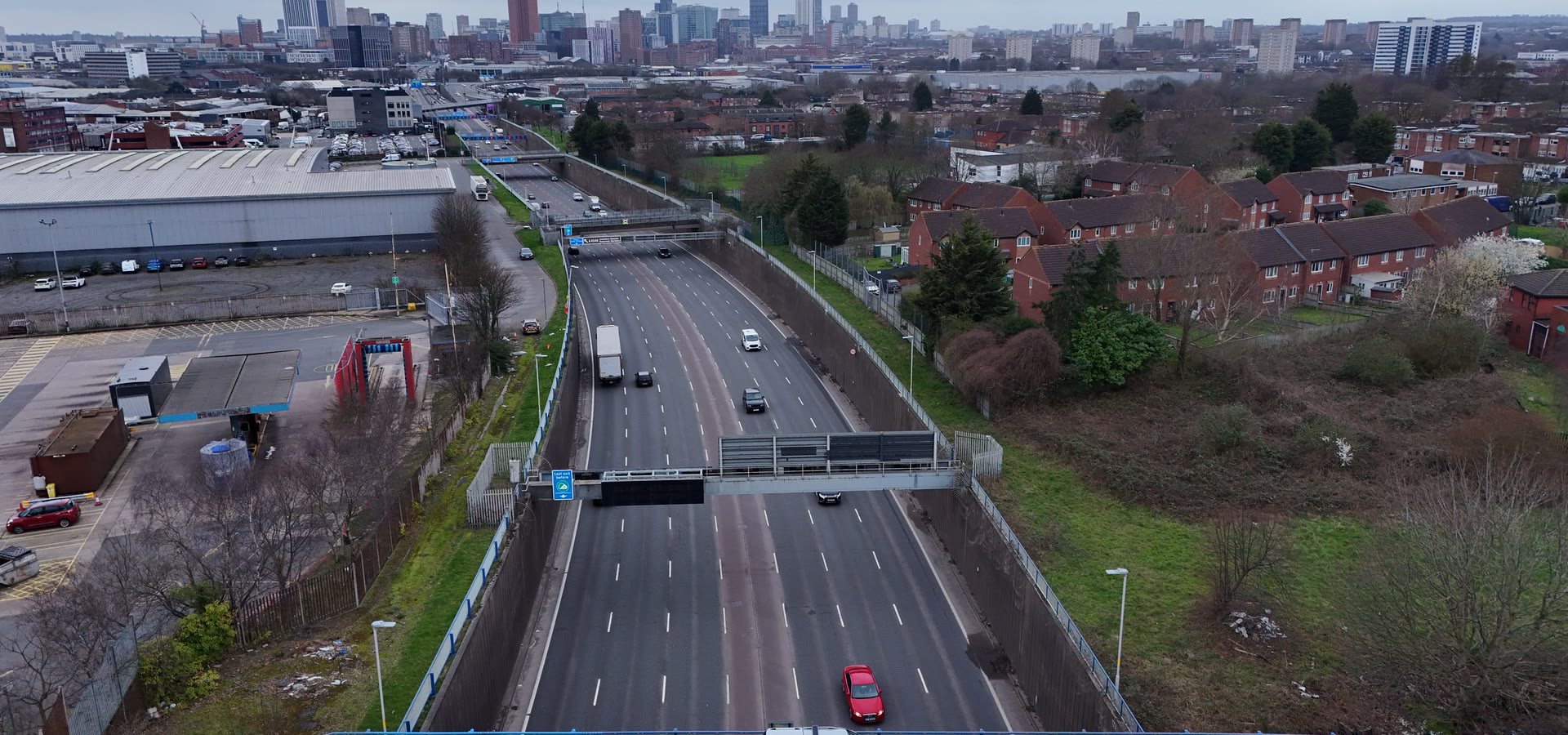
On the Birmingham Highways Maintenance Contract with Kier, every column became a geo-tagged, condition-scored record loaded into the client's GIS. Along the way the survey logged 3,574 OSID nodes, 900 telecell timers, 424 photocells, 520 missing or damaged stickers and 232 heritage lanterns.
That is the same record a handback needs: what is there, where it is, what it is, and what state it is in.
Read the Birmingham case studyAlongside your other tests
Electrical testing and structural testing of column roots still need teams on the ground. Our record gives them a complete, asset-referenced inventory to attach their results to, so the handback file is one dataset, not several.
For either side, or both
We work for the authority, the PFI contractor, or on a joint survey both sides agree to rely on.
Questions clients ask.
Does a drone survey replace electrical and structural testing?
No. Electrical inspection and testing, and structural testing of column roots and bases, still need specialist teams on the ground. We record everything you can see above ground, under each asset ID, so their results have a complete, referenced inventory to attach to.
Who do you work for on a handback?
The authority, the PFI contractor, or both on a joint survey that each side agrees to rely on. A single agreed record avoids arguing over two different surveys at the end of the contract.
Do you need road closures?
No. We fly from footways and verges, never over live traffic, with no lane closures, MEWPs or impact protection vehicles. One van, one drone and a two-person crew.
How fast is it?
In Birmingham with Kier we averaged 75.1 columns a shift, against 14.5 for a MEWP gang. Rates vary with density and access, and we agree a programme before we start.
What if our inventory is out of date?
That is the point of the baseline. We capture what is on the street and report every difference against your list, so the schedule can be corrected before the Final Survey.
Can you grade to our contract criteria?
Yes. Send us the handback schedule or condition criteria and we grade every asset against them, so the record speaks the contract's language.
Lighting PFI ending before 2035?
Send us the contract end date and the asset schedule. We will come back with a survey plan, a programme and a fixed price.