A single failed streetlight looks like a small fault, but it sits on top of a much bigger job: street lighting maintenance inspection, fault response, ageing columns and a constant programme of replacement. That is why one dark lamp can take longer to fix than residents expect. Here is what the work really involves, and where a drone inspection makes it safer and faster.
At a glance
- Lighting maintenance covers routine inspection, reactive fault repair and long-term column replacement.
- Faults are found by night patrols, public reports, connected lighting and, increasingly, drone surveys.
- A cable fault or a failed column is a far bigger job than a failed lamp.
- In Birmingham, drone inspection ran at 5.18 times the output of the MEWP method with 93.5% less survey-phase carbon.
Why a lighting fault is never just about the lamp
When lighting works, nobody mentions it. When it fails, residents notice at once and drivers lose visibility. One dark patch on a walking route can generate more public feeling than a far larger, less visible problem elsewhere on the network.
Lighting also sits across two jobs at once. It supports safe movement on the road, and it shapes how safe a place feels after dark for people on foot. A contract can sit under lighting or property services and still affect drivers, cyclists and residents walking home every night.
How faults are found
The first layer of the job is knowing something is wrong. Authorities use a mix of methods:
- Night scouting patrols, where a crew drives a route after dark looking for outages.
- Public reporting through a council website or app.
- Connected lighting that reports its own status through a central management system, closing the gap between a lamp failing and anyone knowing.
- Drone inspection, which captures the condition of each column top on a planned cycle, rather than waiting for a failure.
Not every fault is the same size
A blown lamp or simple electrical fault is usually the quickest fix, sometimes sorted within days. A fault in the underground cable feeding a column is a different job, often needing excavation to trace and repair the cable before the light can come back on.
Behind the column sit electrical cabinets, feeder pillars and, increasingly, a central management system that lets the lighting team dim, switch or monitor columns remotely. Maintenance contracts often stretch beyond street columns into other public lighting, because the same crews, electrical safety standards and fault-response logic apply.
Columns do not last forever
Steel and concrete columns have design lives measured in decades, but corrosion, weather, vehicle strikes and age shorten them in practice. A failed column is not just a lighting problem. It is a physical hazard on a public footway or verge.
Councils run structural testing programmes to find columns near the end of their safe life before they fail. Replacing one usually means excavating around the base, disconnecting and reconnecting the supply and installing a new unit, often leaving that spot unlit for longer than a lamp change would.
Access is the hard part
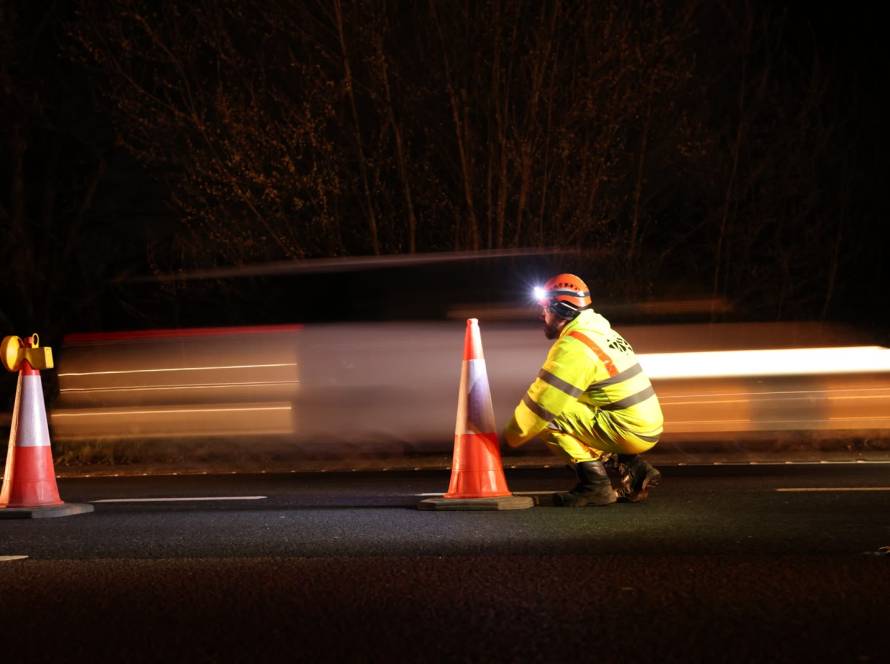
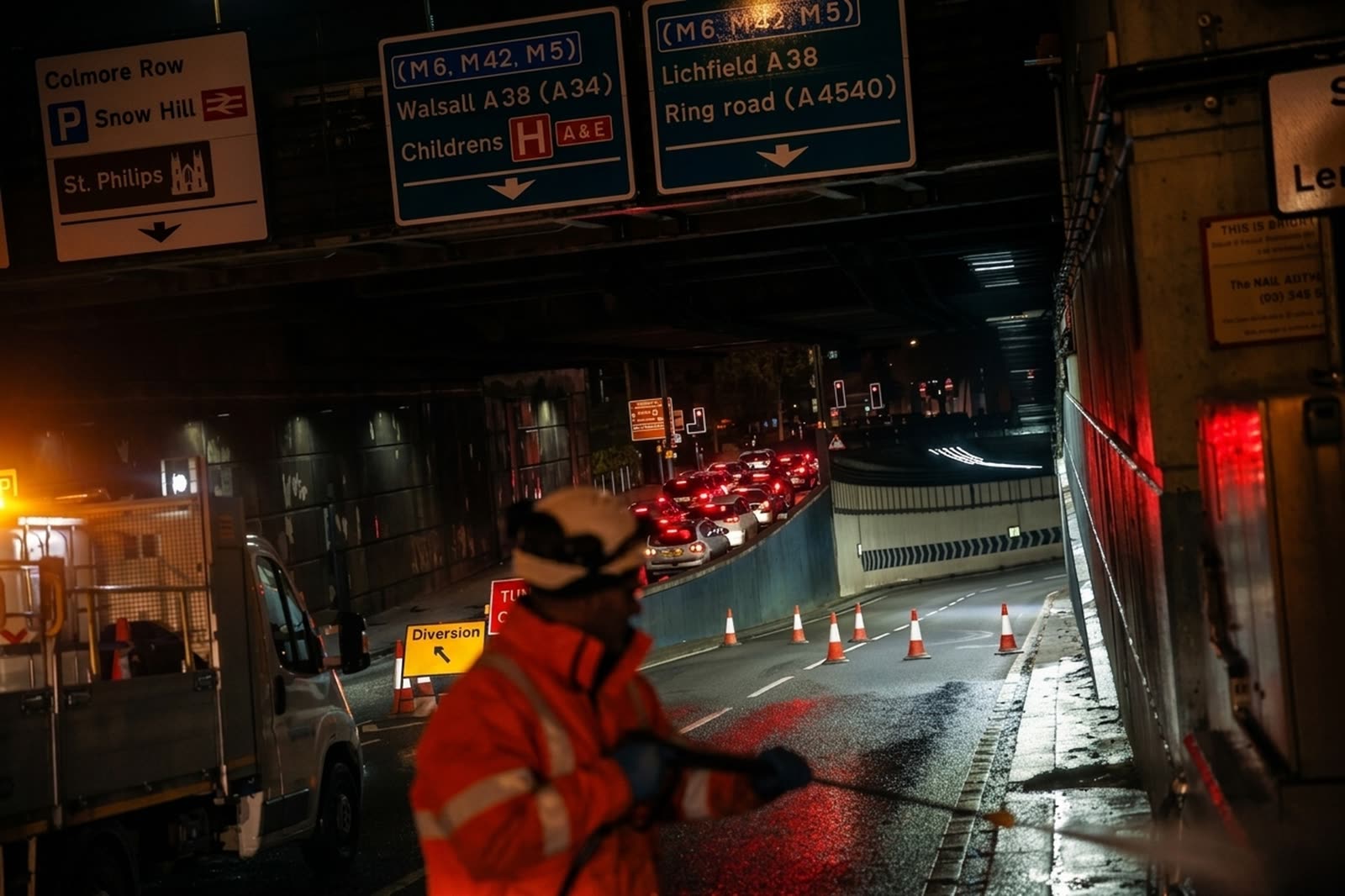
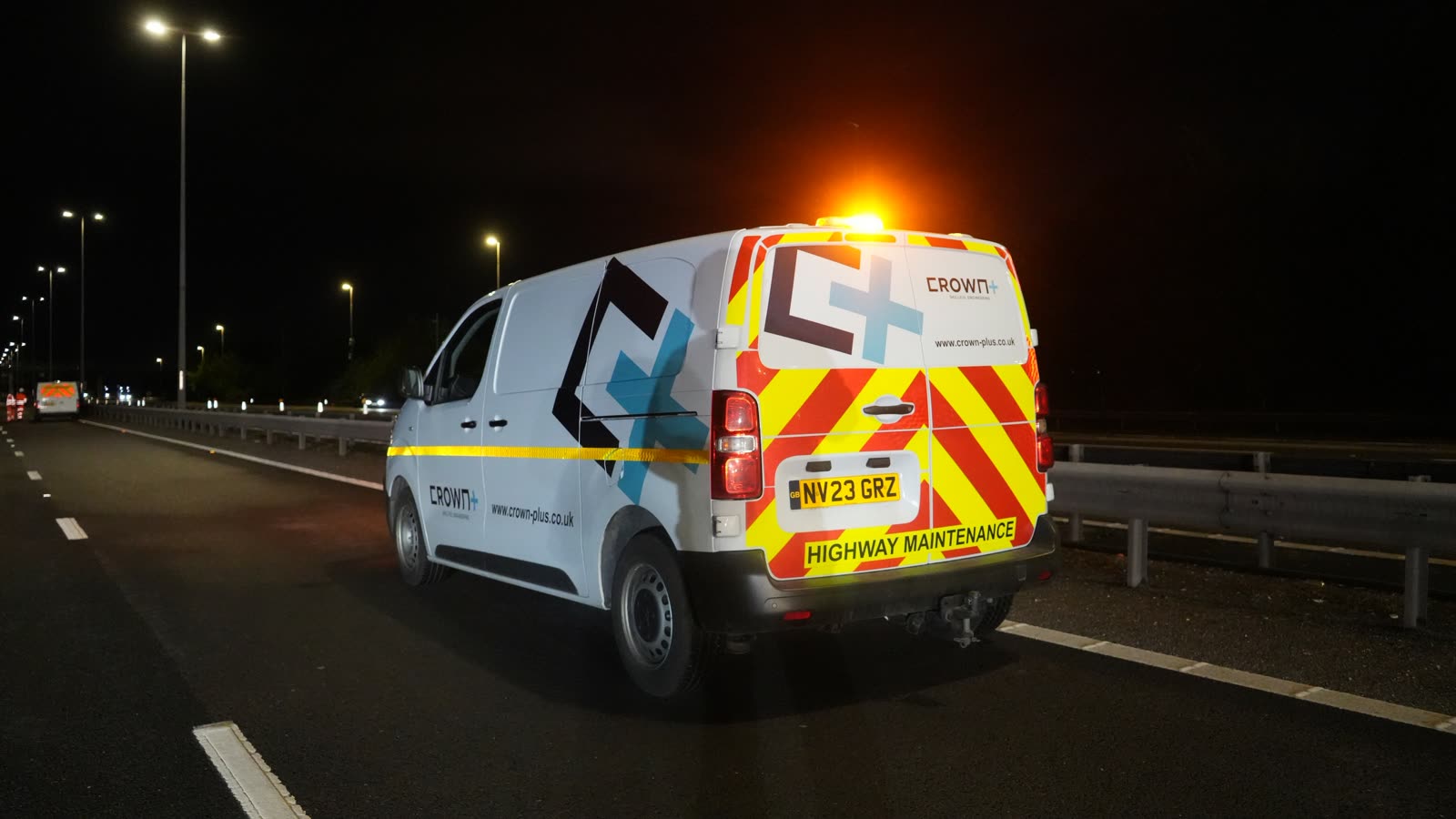
Crews often work beside live traffic, around parked cars or in busy public spaces. Lighting work tends to happen at night, when faults are most visible and daytime disruption is lowest. Inspecting the top of a column traditionally means a MEWP, and on anything busier than a quiet residential street that brings traffic management with it.
Where drones fit in street lighting maintenance inspection
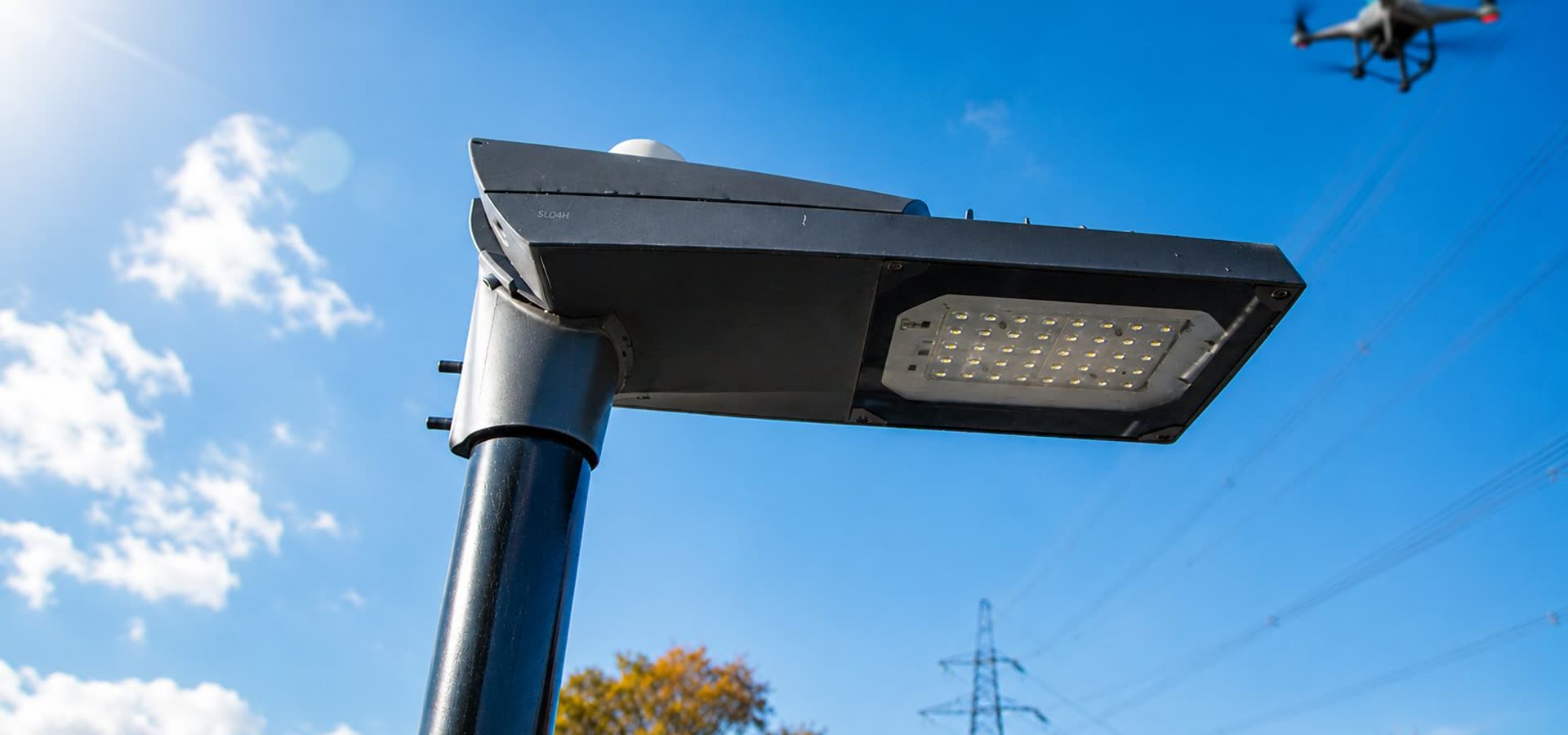
The parts of a column most likely to hide problems, the lantern, bracket, fixings and nodes, are the parts hardest to see from the pavement. A drone captures them close up from the footway or verge, column by column, referenced to the asset list. We never fly over live traffic.
In Birmingham, working with Kier on a network of around 94,000 columns, we surveyed 13,248 columns this way. Output rose to 75.1 columns a shift against a 14.5 baseline, survey-phase CO₂ fell by 93.5%, and there were no accidents, injuries or near misses. The survey also logged 3,574 OSID nodes, 900 telecell timers, 424 photocells and 520 missing or damaged stickers. See the Birmingham case study.
The same approach works at height. For Milestone and Reading Borough Council we inspected high masts up to 53 metres from ground-launched drones, with no lifts or closures and data ready for the council’s CMS. Read the Reading case study.
What a drone does not replace
Ultrasonic wall thickness testing, structural load testing and electrical testing to BS 7671 need physical contact, and all three are done at ground level. A drone survey tells you which columns warrant that testing, rather than spreading it evenly across the network. Our drone street lighting inspection guide covers the full method, outputs and limits.
Frequently asked questions
Why does it take so long to fix some streetlight faults?
Because the visible symptom and the cause are not always the same size of problem. A failed lamp or simple electrical fault is quick to fix. A fault in the underground cable often means excavation to trace and repair it before the light can go back on.
What can a drone see that a ground inspection cannot?
The lantern, bracket, fixings, nodes, photocells and identification stickers at the top of the column, captured close up and referenced to the asset list, without anyone working at height.
Does a drone survey replace structural or electrical testing?
No. Ultrasonic wall thickness testing, structural load testing and electrical testing need physical contact and are done at ground level. A drone survey shows which columns warrant that testing.
Do you need lane closures to inspect street lighting by drone?
In most cases no. We fly from footways and verges, never over live traffic. In Birmingham the work needed no lane closures and no impact protection vehicle.
Want to see what a drone survey would show on your lighting stock? Get in touch, or see our street lighting inspection service.